
Dholavira, Lothal, Kalibangan, Rakhigarhi and Other Major Harappan Sites
Dholavira, Lothal, Kalibangan, Rakhigarhi and Other Major Harappan Sites
The Indus Civilization was spread across a vast region and included many important settlements beyond Harappa and Mohenjo-daro. Dholavira, Lothal, Kalibangan and Rakhigarhi each reveal different aspects of Harappan urban life, trade, farming, water management and regional diversity.
Quick Summary
The Indus Civilization was spread across a vast region and included many important settlements beyond Harappa and Mohenjo-daro. Dholavira, Lothal, Kalibangan and Rakhigarhi each reveal different aspects of Harappan urban life, trade, farming, water management and regional diversity.
☷ Table of Contents ⌃
- 1🗺️ The Harappan Civilization Was Much Larger Than Two Cities
- 2🏜️ Dholavira: The City of Water Management
- 3🪧 Dholavira and the Famous Signboard
- 4⚓ Lothal: Trade, Craft and the Famous Basin
- 5🌊 Why Was Lothal Important for Trade?
- 6🌾 Kalibangan: The Famous Ploughed Field
- 7🏙️ Rakhigarhi: One of the Largest Harappan Sites
- 8🏺 Banawali: A Harappan Site in Haryana
- 9🐪 Surkotada: A Fortified Site in Kutch
- 10🏘️ Alamgirpur: Harappan Expansion to the East
- 11🧭 Why Are So Many Different Sites Important?
- 12📊 Major Sites at a Glance
- 13⚠️ Common Exam Traps
- 14🎯 10-Second Revision
- 15📌 The Big Idea
🗺️ The Harappan Civilization Was Much Larger Than Two Cities
Harappa and Mohenjo-daro are the most famous cities of the Indus Civilization, but they were only part of a much larger settlement network. Archaeologists have identified hundreds of Harappan and related sites across present-day Pakistan and northwestern and western India.
Different sites help us understand different parts of Harappan life. Some are important for urban planning, some for trade, some for farming, some for water management and some for showing how widely the civilization spread.
For competitive exams, the easiest way to remember them is: site → present-day location → special feature.
🏜️ Dholavira: The City of Water Management
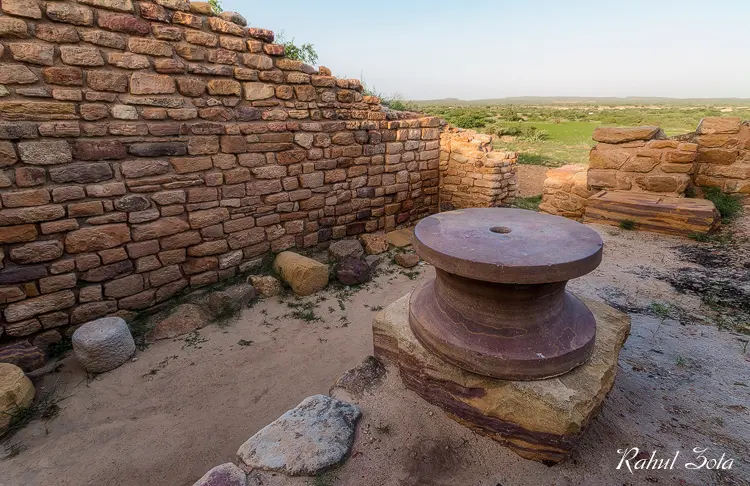
Dholavira is located on Khadir island in the Rann of Kutch, Gujarat. It is one of the best-preserved Harappan urban settlements and is especially famous for its water-management system.
Dholavira developed in a dry environment where water was scarce. The inhabitants built large reservoirs, channels and other structures to collect and store water. This makes the site extremely important for understanding how Harappan communities adapted to difficult environmental conditions.
Another special feature of Dholavira is the extensive use of stone in construction. Many Harappan sites are better known for brick architecture, so Dholavira stands out for its strong stone-built elements.
The city was divided into different fortified sectors, including areas often described as the castle, middle town and lower town. This more complex internal division makes Dholavira different from the simplified two-part model often associated with some other Harappan cities.
🪧 Dholavira and the Famous Signboard
One of Dholavira's most famous finds is a large arrangement of Harappan script signs often described as a signboard.
The signs were much larger than the tiny inscriptions usually found on seals. Because the Harappan script remains undeciphered, we do not know what the signboard actually said.
For exams, remember: Dholavira → reservoirs + stone architecture + large Harappan signboard.
⚓ Lothal: Trade, Craft and the Famous Basin
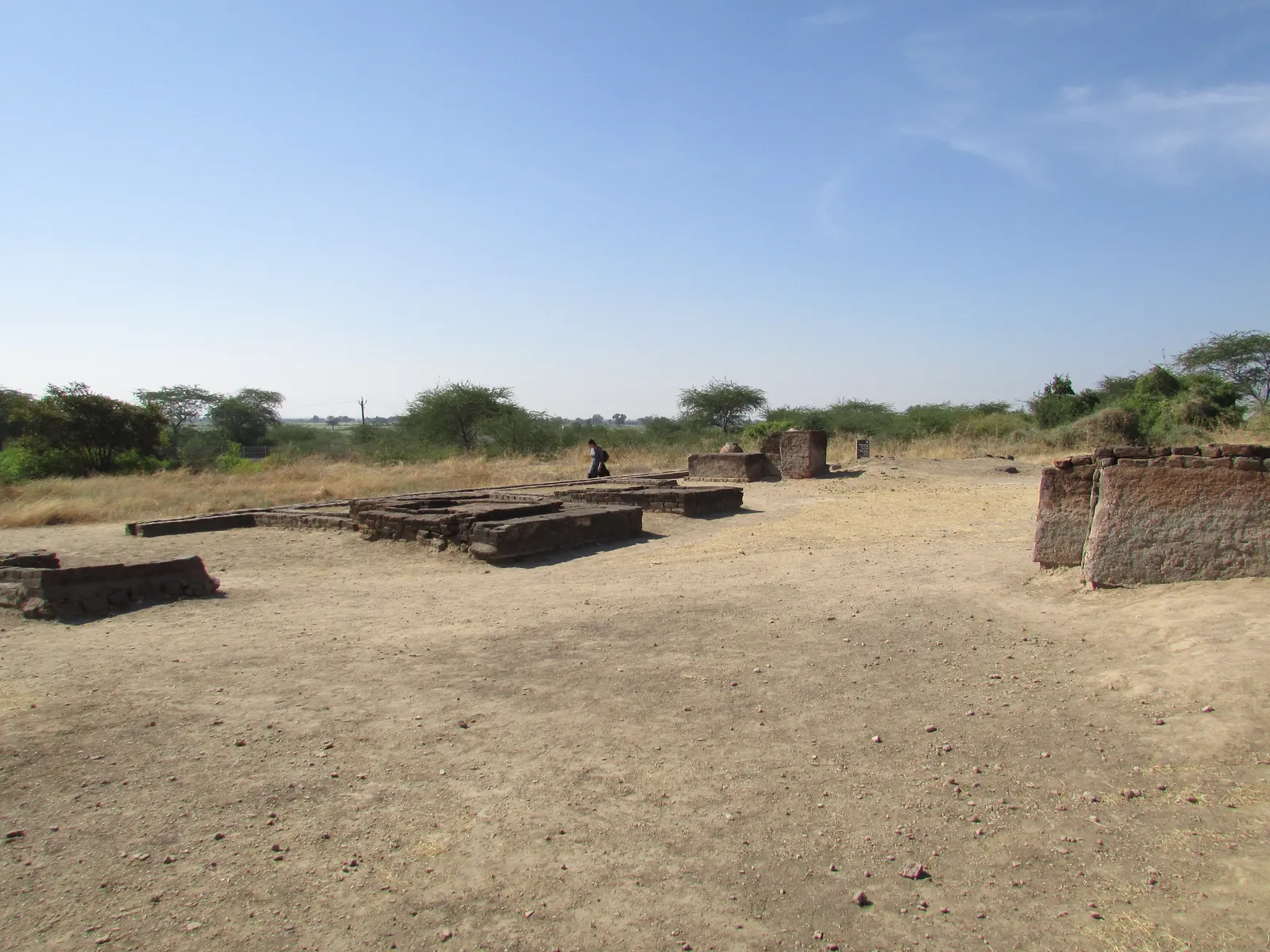
Lothal is located in Gujarat and was an important Harappan settlement connected with craft production and exchange.
The site is especially famous for a large rectangular brick-lined basin. Older textbooks commonly call it a dockyard and connect it with maritime trade.
However, the exact interpretation of this structure has been debated. It is safer to say that Lothal had a large brick-lined basin traditionally interpreted as a dockyard rather than treating the function as completely beyond dispute.
Lothal is also important for bead-making and craft production. Archaeological evidence shows that skilled craftspeople worked with materials such as semi-precious stones.
🌊 Why Was Lothal Important for Trade?
Lothal's location in Gujarat placed it close to routes linking inland settlements with the coast and the Arabian Sea region.
This made it useful for exchange of raw materials and finished goods. Harappan trade networks connected different parts of the subcontinent and also reached regions beyond it.
For exams, remember: Lothal → Gujarat → basin traditionally called dockyard → bead-making → trade.
🌾 Kalibangan: The Famous Ploughed Field
Kalibangan is located in present-day Rajasthan, in Hanumangarh district.
It is especially famous for archaeological evidence interpreted as a ploughed agricultural field. The field preserved furrow marks, making it one of the most discussed pieces of evidence for Harappan farming practices.
Kalibangan also preserves evidence from both Pre-Harappan and Harappan phases, which makes it useful for studying change over time.
The site is also associated with structures often described as fire altars. As with many archaeological interpretations, the term reflects the way archaeologists understand the structures and should not be treated as if a Harappan text had labelled them.
For exams: Kalibangan → Rajasthan → ploughed field → fire-altars interpretation.
🏙️ Rakhigarhi: One of the Largest Harappan Sites
Rakhigarhi is located in Haryana, in the Hisar region. It is one of the largest known Harappan archaeological sites.
The settlement consists of several mounds and shows a long sequence of occupation. Excavations have revealed houses, pottery, seals, craft objects and burials.
Rakhigarhi is particularly important because it shows that major Harappan urban centres were not limited to the Indus valley in present-day Pakistan. Large settlements also existed much farther east.
For exams, remember: Rakhigarhi → Haryana → one of the largest Harappan sites → multiple mounds and burials.
🏺 Banawali: A Harappan Site in Haryana
Banawali, also in Haryana, contains evidence from Pre-Harappan and Mature Harappan phases.
Its remains show fortified settlement features, pottery and other material associated with the Harappan cultural tradition.
Banawali is useful for understanding how Harappan settlements developed in the Ghaggar-Hakra region.
🐪 Surkotada: A Fortified Site in Kutch
Surkotada is another Harappan site in Gujarat, in the Kutch region.
It is known for its fortified settlement and has often appeared in exam material because of debates surrounding animal remains, especially claims related to horse bones.
Students should be cautious here: the identification and historical significance of particular animal remains have been debated. Do not treat every older exam-book claim as completely settled archaeology.
🏘️ Alamgirpur: Harappan Expansion to the East
Alamgirpur, in present-day Uttar Pradesh, is important because it represents the eastern spread of Late Harappan cultural traditions.
It was not a giant city comparable to Mohenjo-daro, but its location shows how far Harappan-related material culture extended eastward.
🧭 Why Are So Many Different Sites Important?
No single Harappan site contains every feature of the civilization.
Dholavira helps us understand water management. Lothal provides evidence for craft and trade. Kalibangan helps us study agriculture. Rakhigarhi shows the importance of large eastern settlements. Harappa and Mohenjo-daro reveal major urban centres.
Together, these sites show that the Harappan Civilization was large, diverse and regionally varied.
📊 Major Sites at a Glance
- Dholavira — Gujarat: reservoirs, stone architecture, large signboard.
- Lothal — Gujarat: brick-lined basin traditionally interpreted as dockyard, bead-making, trade.
- Kalibangan — Rajasthan: ploughed field, Pre-Harappan and Harappan levels, so-called fire altars.
- Rakhigarhi — Haryana: one of the largest Harappan sites, multiple mounds, burials.
- Banawali — Haryana: Pre-Harappan and Harappan settlement.
- Surkotada — Gujarat: fortified Harappan settlement.
- Alamgirpur — Uttar Pradesh: eastern extension of Late Harappan culture.
⚠️ Common Exam Traps
- Dholavira = Gujarat, not Rajasthan.
- Kalibangan = Rajasthan.
- Rakhigarhi = Haryana.
- Lothal's basin is traditionally called a dockyard, but its exact function has been debated.
- Dholavira is especially famous for water reservoirs and stone architecture.
- Kalibangan is strongly associated with evidence of a ploughed field.
- Rakhigarhi is one of the largest Harappan sites.
🎯 10-Second Revision
Dholavira → water
Lothal → trade
Kalibangan → ploughed field
Rakhigarhi → very large site
If you remember these four links, many exam questions become much easier.
📌 The Big Idea
The Indus Civilization was not one city or even two cities. It was a large network of settlements spread across different environments.
The differences among Dholavira, Lothal, Kalibangan and Rakhigarhi show that Harappan communities shared a broad cultural tradition while also adapting to local geography, resources and economic needs.
Was this article helpful?
Help us improve by giving your feedback.
Test your understanding
Which Harappan site is especially famous for its sophisticated reservoirs and water-management system?
- A. Dholavira
- B. Kalibangan
- C. Alamgirpur
- D. Banawali
Dholavira developed an impressive system of reservoirs and channels to manage scarce water in the dry Kutch environment.
Which Harappan site is associated with archaeological evidence of a ploughed field?
- A. Lothal
- B. Kalibangan
- C. Dholavira
- D. Surkotada
Kalibangan is especially famous for preserved furrow marks interpreted as evidence of a ploughed agricultural field.
Rakhigarhi is located in which present-day Indian state?
- A. Rajasthan
- B. Gujarat
- C. Haryana
- D. Punjab
Rakhigarhi is located in the Hisar region of Haryana and is one of the largest known Harappan sites.
Which feature is traditionally associated with Lothal?
- A. Great Bath
- B. Large Harappan signboard
- C. Ploughed field
- D. A large brick-lined basin interpreted as a dockyard
Lothal is famous for a large brick-lined basin that has traditionally been interpreted as a dockyard connected with trade.
What makes Dholavira architecturally distinctive among major Harappan sites?
- A. Extensive use of stone along with sophisticated water structures
- B. Use of only wooden houses
- C. Absence of fortification
- D. A giant pyramid
Dholavira is particularly notable for extensive stone construction and its elaborate water-management system.
Why is Alamgirpur important in the study of the Harappan Civilization?
- A. It contains the Great Bath
- B. It was the capital of the civilization
- C. It shows the eastern spread of Late Harappan cultural traditions
- D. It is located in Sindh
Alamgirpur in present-day Uttar Pradesh is important because it demonstrates how far Harappan-related cultural material extended to the east.
Which interpretation of Lothal's large brick-lined basin is the most historically careful?
- A. It was unquestionably a modern-style seaport
- B. It is traditionally interpreted as a dockyard, but its exact function has been debated
- C. It was definitely a royal swimming pool
- D. It was built after the Harappan period
The basin is famous as the 'dockyard' of Lothal, but scholars have debated its exact function, so the cautious wording is preferable.
What do the differences among Dholavira, Lothal, Kalibangan and Rakhigarhi most clearly show?
- A. The sites belonged to completely unrelated civilizations
- B. Every Harappan settlement had exactly the same layout and economy
- C. Harappan culture existed only in coastal Gujarat
- D. Harappan communities shared a broad culture but adapted to different local environments and economic needs
The sites share Harappan cultural traits, but their different water systems, agricultural evidence, trade roles and settlement forms reveal important regional adaptation.