
Agriculture, Animal Husbandry and Food in the Indus Civilization
Agriculture, Animal Husbandry and Food in the Indus Civilization
Harappan food came from farming, animal husbandry, fishing, hunting and gathering. Wheat and barley were important crops, while cattle, sheep, goats and buffaloes formed part of the livestock economy. Regional differences meant that food habits were not identical everywhere.
Quick Summary
Harappan food came from farming, animal husbandry, fishing, hunting and gathering. Wheat and barley were important crops, while cattle, sheep, goats and buffaloes formed part of the livestock economy. Regional differences meant that food habits were not identical everywhere.
☷ Table of Contents ⌃
- 1🌾 Cities Needed Farmers Behind Them
- 2🌾 Wheat and Barley Were Major Crops
- 3🌱 Pulses, Oilseeds and Other Crops
- 4🧭 One Civilization, Different Farming Systems
- 5🐂 Cattle Were Extremely Important
- 6🐐 Sheep, Goats and Buffaloes
- 7🐓 What About Other Domestic Animals?
- 8🌾 How Were Fields Cultivated?
- 9💧 Did the Harappans Use Irrigation?
- 10🌊 Floodwater Could Help Agriculture
- 11🍇 Gathering Wild Foods
- 12🐟 Fish and Aquatic Food
- 13🦌 Hunting Continued Alongside Farming
- 14🍲 What Did an Ordinary Harappan Meal Look Like?
- 15🏙️ How Did Cities Get Their Food?
- 16🧪 How Do Archaeologists Know What People Ate?
- 17⚠️ Common Exam Traps
- 18🎯 10-Second Revision
- 19📌 The Big Idea
🌾 Cities Needed Farmers Behind Them
The great cities of the Indus or Harappan Civilization could not survive on urban crafts and trade alone. Thousands of people living in cities such as Harappa and Mohenjo-daro needed regular supplies of grain, vegetables, animal products and other food.
A large part of this food was produced by farmers and herders living in villages and smaller settlements around the cities. Their work formed the economic base that supported craftspeople, traders and other urban residents.
Archaeologists study charred seeds, plant remains, animal bones, tools, pottery and field traces to reconstruct what Harappan people grew and ate.
🌾 Wheat and Barley Were Major Crops
Wheat and barley were among the most important crops in many Harappan regions. Archaeological plant remains show that these cereals formed a major part of the food economy, especially in the northwestern areas.
Barley and wheat could be stored, transported and processed in different ways. They may have been ground into flour or cooked as porridge-like foods, although the exact recipes used by Harappan households cannot usually be reconstructed with certainty.
Grain was important, but Harappan agriculture was not based on only one crop.
🌱 Pulses, Oilseeds and Other Crops
Archaeological evidence also points to crops such as peas and other pulses, sesame, mustard and linseed. Pulses would have added variety and protein to the diet, while sesame and mustard could provide oil.
Evidence of rice appears in some Harappan-related contexts, particularly toward eastern and southern regions, but its importance was not the same everywhere. It would therefore be misleading to imagine rice as the main staple across the entire civilization.
In parts of Gujarat and other drier regions, different varieties of millets also became important. This regional variation is crucial: Harappan farmers adapted to local soils, rainfall and water availability.
🧭 One Civilization, Different Farming Systems
The Harappan Civilization covered a huge geographical area, so agriculture could not be identical everywhere.
Punjab and Sindh had river plains. Gujarat included semi-arid and coastal environments. Rajasthan and Haryana had different rainfall and river conditions again.
This means that farmers selected crops according to local conditions. Wheat and barley were especially important in many northern areas, while millets became more useful in some warmer and drier regions.
The Harappan food economy was therefore diverse rather than uniform.
🐂 Cattle Were Extremely Important
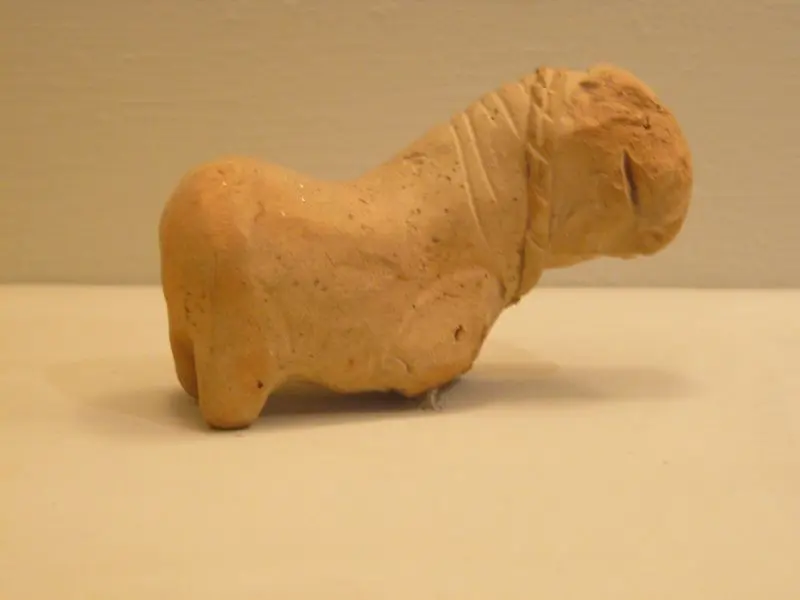
Animal bones and figurines show that cattle were extremely important in Harappan life. Zebu or humped cattle are frequently represented in Harappan art.
Cattle could provide meat and probably milk, while oxen were useful for pulling carts and helping in agricultural work. Their importance was therefore not limited to food alone.
Terracotta models and seals showing animals also tell us that animals occupied an important place in Harappan material culture, although an artistic representation alone cannot tell us exactly how every animal was used.
🐐 Sheep, Goats and Buffaloes
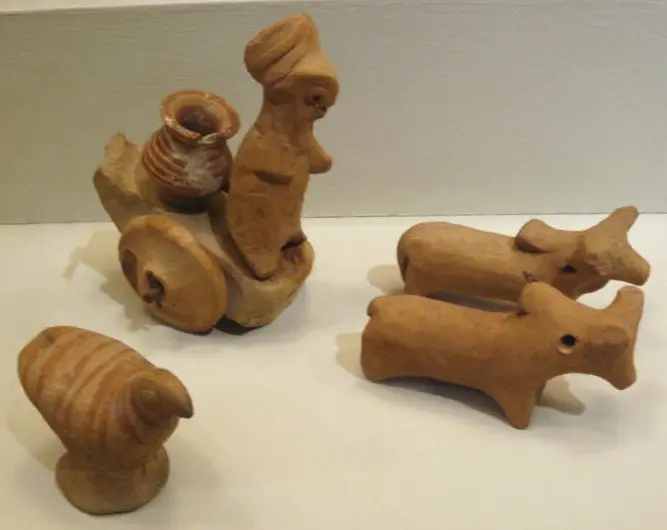
Harappan communities also kept sheep, goats and buffaloes. These animals could provide meat and other products and were well suited to different local environments.
Sheep and goats are especially useful in mixed farming systems because they can graze in areas where crop cultivation may be difficult.
Herding therefore worked alongside farming rather than being a completely separate way of life.
🐓 What About Other Domestic Animals?
Evidence from different Harappan sites also includes domestic fowl and other animals. However, the importance of each species differed from one region to another.
This is why archaeologists study animal bones site by site rather than assuming that every Harappan settlement had exactly the same diet.
🌾 How Were Fields Cultivated?
The Harappans used agricultural tools that included the plough. Wooden ploughs themselves rarely survive because wood decays, but terracotta models of ploughs and field traces provide evidence for plough agriculture.
The most famous evidence comes from Kalibangan in Rajasthan, where archaeologists identified marks interpreted as a ploughed field.
The preserved furrows show crossing lines, suggesting that more than one crop might have been planted in the same field pattern.
💧 Did the Harappans Use Irrigation?
This question needs careful wording. Harappan farmers certainly needed reliable water, but we should not imagine one giant irrigation system covering the entire civilization.
In river plains, farmers could use seasonal floods and moisture left behind by rivers. In areas with less rainfall, water storage or smaller-scale irrigation may have been necessary.
NCERT notes that some form of irrigation may have been used because many Harappan areas did not receive heavy rainfall. However, the exact system differed from region to region.
It is safer to say that Harappan farmers used different methods to manage water according to local conditions.
🌊 Floodwater Could Help Agriculture
Rivers were not only sources of danger from floods. Seasonal flooding could also leave behind fertile silt and moisture useful for crops.
In the Indus plains, farmers could take advantage of this natural cycle. Agriculture therefore depended on understanding rivers, seasons and local landscapes.
🍇 Gathering Wild Foods
Harappan food did not come only from cultivated fields. People also collected naturally available foods.
Evidence suggests the use of fruits such as jujube or ber, dates and other plant resources in different regions. Wild plants could supplement the food produced by farming.
Exactly which fruits and spices were important at every site is difficult to determine, so claims must be based on actual archaeological plant remains rather than modern assumptions.
🐟 Fish and Aquatic Food
Fish formed part of the diet at a number of Harappan settlements. Communities living near rivers, lakes and the coast had access to different aquatic resources.
Fish bones and shell remains have been discovered at archaeological sites. At coastal settlements, marine resources could be particularly important.
Fish could also move through exchange networks, so a food item did not always have to be consumed where it was originally obtained.
🦌 Hunting Continued Alongside Farming
Even though the Harappans were farmers and herders, hunting did not disappear.
Animal remains show that wild species such as deer, antelope and wild boar were also hunted in some regions. Wild birds and other animals may also have been used.
This is an important exam point: agriculture did not completely replace hunting, fishing or gathering. Several food-producing strategies could exist together.
🍲 What Did an Ordinary Harappan Meal Look Like?
We cannot reconstruct an exact Harappan recipe book, because their script has not been deciphered and meals rarely survive archaeologically.
However, based on available evidence, a meal could include cereals such as wheat or barley, pulses, plant oils, vegetables or fruits and, depending on household and region, milk products, meat or fish.
Pottery vessels of different shapes and sizes were used for cooking, storing and serving food.
The safest conclusion is that the Harappan diet was varied and strongly influenced by local environment and access to resources.
🏙️ How Did Cities Get Their Food?
Large cities depended on the countryside. Farmers and herders living outside major urban centres produced food that could support city populations.
This created an important relationship:
Village and countryside → crops and animals → towns and cities.
But archaeologists still debate exactly how grain and livestock were collected, exchanged or redistributed. We should not automatically imagine a tax system unless there is evidence for it.
🧪 How Do Archaeologists Know What People Ate?
Several kinds of evidence are used:
- Charred seeds and grains help identify crops.
- Pollen and microscopic plant remains can provide information about vegetation.
- Animal bones reveal which animals were eaten or kept.
- Fish bones and shells show use of aquatic resources.
- Grinding stones and agricultural tools provide clues about food production.
- Pottery helps researchers study cooking, storage and serving practices.
The study of ancient plant remains is called archaeobotany, while the study of animal remains from archaeological sites is often called zooarchaeology.
⚠️ Common Exam Traps
- Wheat and barley were major Harappan crops.
- Cattle, sheep, goats and buffaloes were important domesticated animals.
- Kalibangan is famous for evidence interpreted as a ploughed field.
- Rice was present in some regions, but it was not necessarily the main crop everywhere.
- Harappan food came from farming + herding + fishing + hunting + gathering.
- Do not assume that one crop or one farming technique was used across the entire civilization.
- Evidence for irrigation should be described carefully; water-management methods varied by region.
🎯 10-Second Revision
Crops: wheat + barley + pulses + sesame + mustard.
Animals: cattle + sheep + goats + buffaloes.
Extra food: fish + hunted animals + wild fruits.
Famous farming evidence: Kalibangan → ploughed field.
📌 The Big Idea
The food system of the Indus Civilization was successful because it was flexible. Farmers grew different crops, herders kept several types of animals, and communities also used fish, wild animals and gathered foods.
Most importantly, Harappan agriculture was regional. People adapted their crops and water use to local climate and geography instead of depending on one identical farming system everywhere.
Was this article helpful?
Help us improve by giving your feedback.
Test your understanding
Which two cereals were especially important in Harappan agriculture?
- A. Maize and potato
- B. Wheat and barley
- C. Tea and coffee
- D. Rubber and sugar beet
Archaeological plant remains show that wheat and barley were among the major crops grown in many Harappan regions.
Which site is famous for evidence interpreted as a ploughed field?
- A. Mohenjo-daro
- B. Dholavira
- C. Kalibangan
- D. Lothal
Kalibangan in Rajasthan preserves furrow marks that archaeologists interpret as evidence of an ancient ploughed field.
Which group contains important domesticated animals of the Harappan economy?
- A. Cattle, sheep, goats and buffaloes
- B. Llamas, alpacas, reindeer and yaks
- C. Kangaroos, emus and koalas
- D. Polar bears, seals and walruses
Animal remains show that cattle, sheep, goats and buffaloes were among the important domesticated animals kept by Harappan communities.
Which statement about rice in the Harappan Civilization is the most accurate?
- A. Rice was certainly the main crop in every Harappan city
- B. Harappans had never seen rice
- C. Rice completely replaced wheat by 2600 BCE
- D. Rice evidence occurs in some regions, but its importance was not uniform across the civilization
Rice appears in some Harappan-related contexts, but wheat, barley and other crops were more important in many regions. Farming varied geographically.
What does the Harappan food economy show about hunting and fishing?
- A. They disappeared completely once agriculture began
- B. They continued alongside agriculture and animal husbandry
- C. Only kings were allowed to hunt
- D. Fish were unknown to Harappan communities
Archaeological evidence includes wild animal and fish remains, showing that hunting and fishing continued alongside farming and herding.
Why is it misleading to describe Harappan agriculture as identical everywhere?
- A. Harappan people did not practise agriculture
- B. Only one Harappan settlement has been discovered
- C. The civilization covered different climates and landscapes, so crop choices and water use varied by region
- D. Every farmer used modern machinery
The Harappan world included river plains, semi-arid regions and coastal areas. Farmers adapted crops and water-management methods to local conditions.
Which evidence would an archaeobotanist primarily use to reconstruct Harappan farming?
- A. Charred seeds and ancient plant remains
- B. Modern newspaper reports
- C. Royal portraits
- D. Satellite television broadcasts
Archaeobotany studies ancient plant remains, including charred seeds and grains, to reconstruct crops and food production.
Which is the most careful statement about Harappan irrigation?
- A. One giant canal system certainly served the entire civilization
- B. Harappans never managed agricultural water
- C. Every field was irrigated by the same method
- D. Water-management methods probably differed by region, including use of floods, stored water and possibly local irrigation
The Harappan Civilization covered varied environments. Evidence supports regional adaptation rather than one identical irrigation system across all settlements.