
Second Urbanisation and the Growing Use of Iron
Second Urbanisation and the Growing Use of Iron
Several centuries after the decline of Harappan urbanism, a new phase of urban growth developed during the first millennium BCE. By around the sixth century BCE, new towns, territorial states, expanding agriculture and trade, coinage and the increasingly widespread use of iron had become major features of northern India.
Quick Summary
Several centuries after the decline of Harappan urbanism, a new phase of urban growth developed during the first millennium BCE. By around the sixth century BCE, new towns, territorial states, expanding agriculture and trade, coinage and the increasingly widespread use of iron had become major features of northern India.
☷ Table of Contents ⌃
- 1🏙️ The Return of Urban Life
- 2❓ Why 'Second' Urbanisation?
- 3🕰️ A Major Turning Point
- 4🌾 The Importance of the Ganga Plains
- 5🔩 The Growing Use of Iron
- 6🌳 Did Iron Alone Create Cities?
- 7🛣️ Trade and Communication
- 8🏺 Northern Black Polished Ware
- 9👑 States and Fortified Cities
- 10🪙 Punch-Marked Coins
- 11🔗 An Interconnected Transformation
- 12🆚 First and Second Urbanisation
- 13⚠️ Common Exam Mistakes
- 14🎯 Quick Revision
- 15📌 The Big Idea
🏙️ The Return of Urban Life
The Harappan civilisation had produced large urban centres such as Harappa, Mohenjo-daro, Dholavira and Lothal. After the decline of Harappan urban systems, comparable urban life was absent for several centuries.
During the first millennium BCE, however, a new phase of urban growth developed, particularly in the Ganga plains and other parts of northern India. Historians commonly refer to this as the Second Urbanisation.
❓ Why 'Second' Urbanisation?
First Urbanisation → Harappan civilisation
Second Urbanisation → new urban phase developing during the first millennium BCE
The second phase developed in a different historical context and should not be understood simply as a direct continuation of Harappan cities.
🕰️ A Major Turning Point
By around the sixth century BCE, several major developments were visible together: early states, new towns, growing use of iron, expanding agriculture, craft production, trade, coinage and new religious and philosophical traditions including Buddhism and Jainism.
🌾 The Importance of the Ganga Plains
The fertile Ganga plains offered favourable conditions for agriculture. Increasing production and agricultural surplus could support people who did not directly produce food, including craftspersons, traders, soldiers, administrators and religious communities.
Surplus alone, however, did not automatically create cities. Systems of exchange, distribution and political organisation were also important.
🔩 The Growing Use of Iron
Iron was not suddenly introduced in India in the sixth century BCE. Evidence for iron use is earlier. Over time, however, iron technology became increasingly widespread.
Iron was used for a range of tools and weapons, and stronger implements could contribute to expanding agricultural activity.
🌳 Did Iron Alone Create Cities?
A simple explanation sometimes runs: iron tools cleared forests, agriculture expanded, surplus increased and cities appeared.
This is too simple. Urbanisation was connected with multiple developments including agriculture, population, trade networks, specialised crafts, political organisation, communication routes and technology.
Iron was important, but it should not be treated as the single cause of the Second Urbanisation.
🛣️ Trade and Communication
Many important towns developed along routes of communication. Rivers facilitated movement of people and goods, while land routes connected different regions.
Urban centres increasingly became places of commercial, political, cultural and craft activity.
🏺 Northern Black Polished Ware
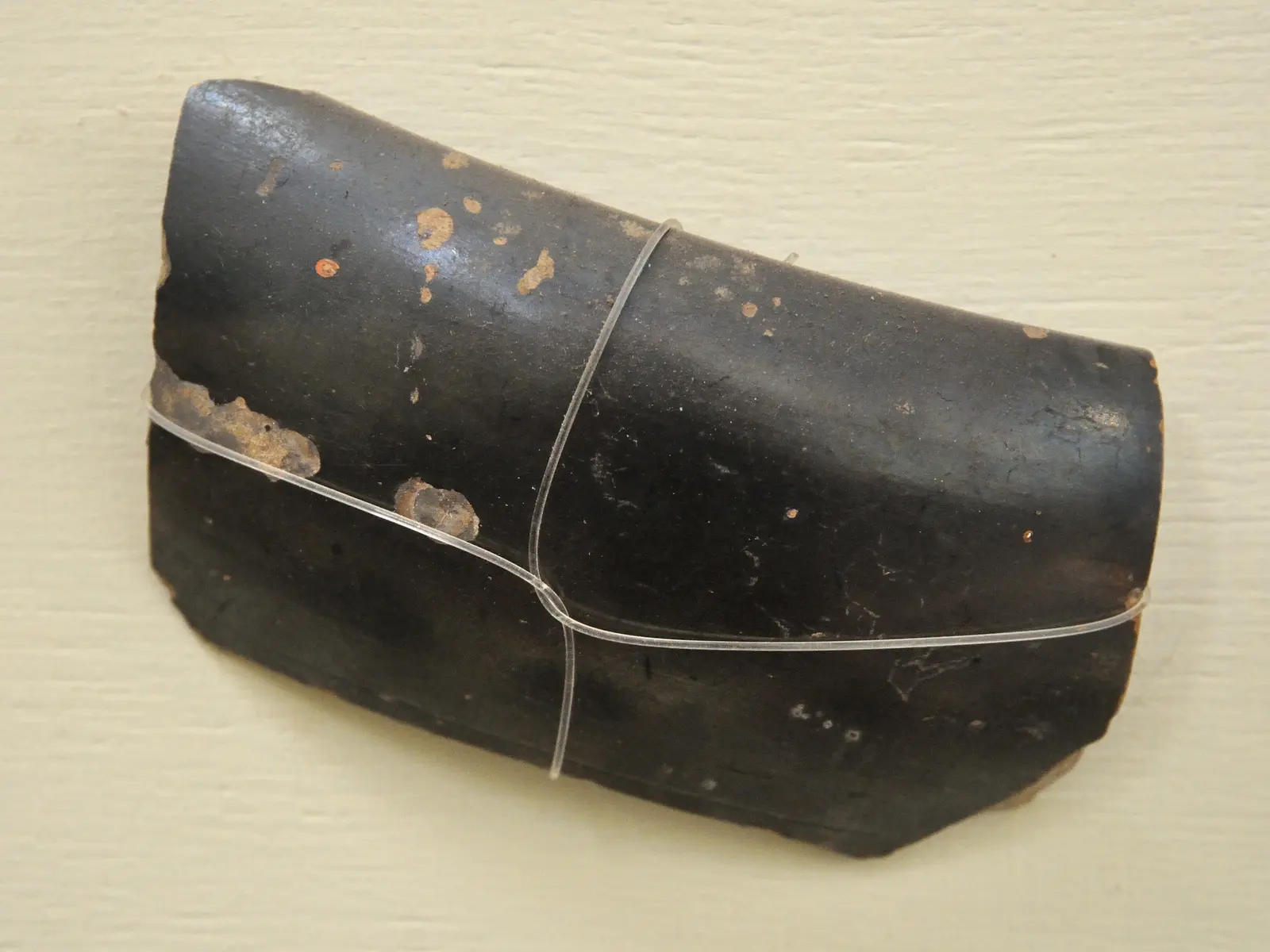
Northern Black Polished Ware (NBPW) is a famous fine pottery tradition associated with many early historic settlements. It is recognised by its highly polished surface.
NBPW is an important archaeological marker, although its presence alone does not prove that a settlement was a major city.
👑 States and Fortified Cities
The growth of towns was closely connected with the rise of larger territorial states known as Mahajanapadas. Many Mahajanapadas had fortified capitals.
Constructing fortifications and supporting armies and developing administrative systems required substantial resources.
🪙 Punch-Marked Coins
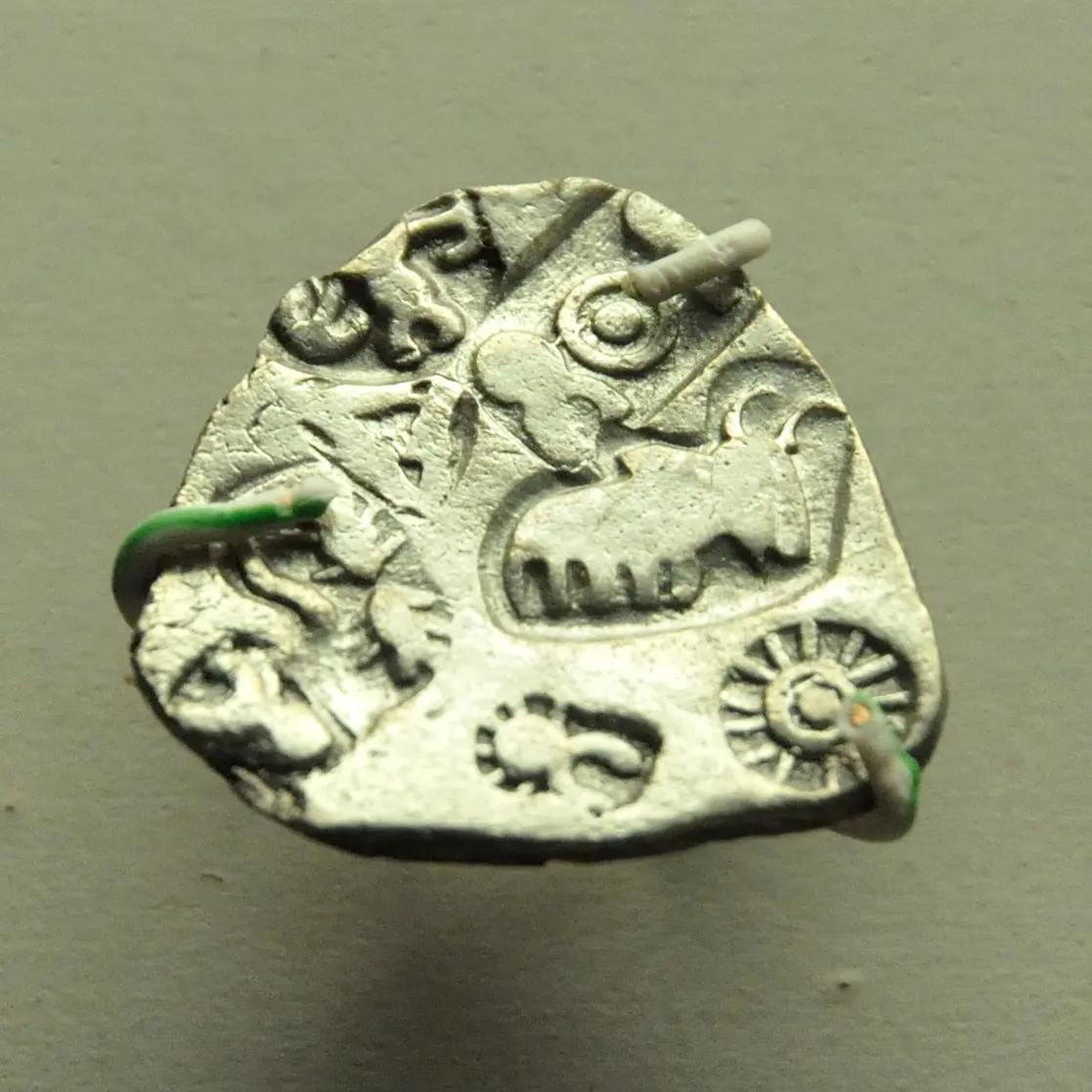
The expansion of exchange was accompanied by the appearance of early coinage. Punch-marked coins are among the best-known forms of early Indian coinage.
Symbols were punched onto pieces of metal, and many early examples were made of silver.
The appearance of coins did not necessarily mean that all older forms of exchange disappeared immediately.
🔗 An Interconnected Transformation
The Second Urbanisation is best understood as the result of interconnected changes rather than one single cause.
Agricultural expansion + surplus + specialised crafts + trade + communication + political states + iron technology all formed parts of this larger transformation.
🆚 First and Second Urbanisation
The First Urbanisation refers to the Harappan civilisation. The Second Urbanisation refers to the new urban phase that developed during the first millennium BCE and became especially visible by around the sixth century BCE.
The Ganga plains became particularly important during this second phase.
⚠️ Common Exam Mistakes
Wrong: Iron first appeared in India in 600 BCE.
Better: Iron was known earlier, but its use became increasingly widespread.
Wrong: Iron alone caused the Second Urbanisation.
Better: Agriculture, surplus, trade, crafts, political organisation, communication and technology all contributed.
Wrong: Mahajanapada cities were simply surviving Harappan cities.
Better: They belonged to a new urban phase that developed in a different historical context.
🎯 Quick Revision
First Urbanisation → Harappan civilisation.
Second Urbanisation → new urban phase of the first millennium BCE.
Major turning point → c. sixth century BCE.
Important region → Ganga plains.
Iron → known earlier, increasingly widespread.
NBPW → important fine polished pottery tradition.
Punch-marked coins → important early form of Indian coinage.
Key point → urbanisation had multiple interconnected causes.
📌 The Big Idea
The Second Urbanisation cannot be reduced to a simple story in which iron tools automatically produced cities. Growing agricultural production, surplus, specialised crafts, trade networks, communication routes, political states and iron technology interacted with one another.
These developments created the setting in which the Mahajanapadas, Magadha, Jainism and Buddhism would become major forces in early Indian history.
Was this article helpful?
Help us improve by giving your feedback.
Test your understanding
India's 'First Urbanisation' is associated with which civilisation?
- A. Mauryan Empire
- B. Harappan Civilisation
- C. Gupta Empire
- D. Mahajanapadas
The Harappan or Indus civilisation represents the first major phase of urbanisation in the Indian subcontinent.
Why is around the sixth century BCE considered a major turning point in early Indian history?
- A. The Harappan civilisation began then
- B. Agriculture began for the first time
- C. Major developments including states, cities, growing iron use and coinage became visible
- D. The Gupta Empire was founded
The period saw major developments including early states, cities, growing iron use, coinage and new systems of thought.
What does NBPW stand for?
- A. Northern Black Polished Ware
- B. Northern Bronze Painted Ware
- C. New Black Pottery Ware
- D. Northern Bihar Painted Ware
NBPW stands for Northern Black Polished Ware, a fine pottery tradition known for its polished surface.
Which statement best describes the relationship between iron technology and the Second Urbanisation?
- A. Iron was the only cause of urbanisation
- B. Iron had no relationship with agriculture
- C. Iron was discovered for the first time exactly in 600 BCE
- D. Iron was important, but agriculture, trade, crafts and political organisation were also significant
The Second Urbanisation was a multi-factor process. Iron technology was important but was not the sole cause.
Why was agricultural surplus important for the growth of towns?
- A. It required everyone to become a farmer
- B. It could support a non-farming population
- C. It eliminated trade
- D. It removed the need for iron
Food surplus could support non-farming groups such as artisans, traders, soldiers and administrators.
Which was a well-known form of early Indian coinage?
- A. Paper currency
- B. Machine-minted gold coins
- C. Punch-marked coins
- D. Plastic tokens
Punch-marked coins are among the best-known forms of early Indian coinage.
What is the best historical approach to understanding the Second Urbanisation?
- A. Examine interconnected economic, technological and political changes
- B. Treat iron technology as the only cause
- C. Treat religious change as the only cause
- D. Treat it as an unchanged continuation of Harappan cities
The Second Urbanisation was connected with interacting developments in agriculture, technology, crafts, trade, communication and political organisation.
Which statement would a historian be most likely to accept?
- A. Every site with NBPW was certainly a major city
- B. Barter disappeared immediately after coins appeared
- C. Every ancient city was located beside an iron mine
- D. Archaeological evidence should be combined with other evidence to understand urbanisation
NBPW, coins and iron objects are important evidence, but no single archaeological marker can explain the entire process of urbanisation.