
Vedas, Brahmanas, Aranyakas and Upanishads
Vedas, Brahmanas, Aranyakas and Upanishads
Vedic literature extends beyond the four Vedas. The Samhitas contain hymns and mantras, the Brahmanas explain sacrifice and ritual, the Aranyakas explore deeper symbolic meanings of ritual, and the Upanishads increasingly focus on philosophical questions concerning the self, ultimate reality, karma, rebirth and liberation.
Quick Summary
Vedic literature extends beyond the four Vedas. The Samhitas contain hymns and mantras, the Brahmanas explain sacrifice and ritual, the Aranyakas explore deeper symbolic meanings of ritual, and the Upanishads increasingly focus on philosophical questions concerning the self, ultimate reality, karma, rebirth and liberation.
☷ Table of Contents ⌃
- 1📚 Understanding Vedic Literature
- 2🕉️ The Four Vedas
- 3🗣️ Oral Transmission
- 4📖 Rigveda
- 5🎵 Samaveda
- 6🔥 Yajurveda
- 7🏠 Atharvaveda
- 8🧠 Easy Formula
- 9📜 Brahmana Texts
- 10⭐ Shatapatha Brahmana
- 11🌳 Aranyakas
- 12💭 Upanishads
- 13🔚 Vedanta
- 14🌌 Brahman and Atman
- 15✨ Famous Expressions
- 16♻️ Karma, Rebirth and Moksha
- 17👩 Gargi and Maitreyi
- 18👦 Nachiketa
- 19📚 Principal Upanishads
- 20🔗 Important Associations
- 21📜 Shruti
- 22🏺 Historical Use of Vedic Literature
- 23🔄 The Intellectual Development
- 24🎯 Quick Revision
- 25📌 The Big Idea
📚 Understanding Vedic Literature
A useful way to understand the development of Vedic literature is through four interconnected layers:
Samhita → Brahmana → Aranyaka → Upanishad
This is not a perfectly rigid chronology. These traditions overlap, and different Vedic schools preserved distinct textual traditions.
🕉️ The Four Vedas
The four Vedas are Rigveda, Samaveda, Yajurveda and Atharvaveda. Their collections of mantras are broadly known as Samhitas.
🗣️ Oral Transmission
Vedic literature was preserved for long periods through highly developed oral traditions. Elaborate methods of recitation helped preserve wording, pronunciation and accent.
The surviving manuscripts are therefore much later than the original composition and oral transmission of Vedic texts.
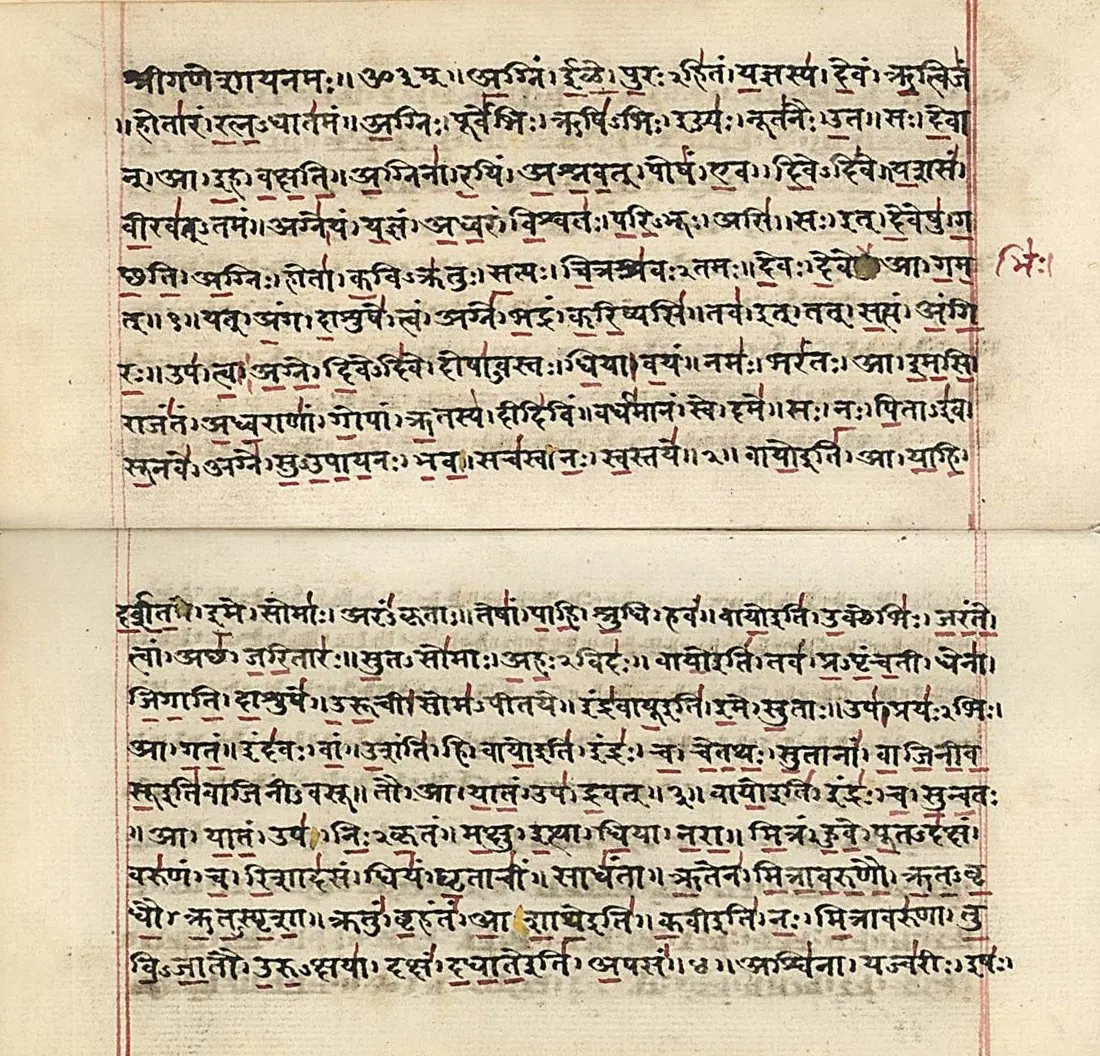
📖 Rigveda
The Rigveda is generally regarded as the oldest Vedic collection. Its Samhita is divided into ten Mandalas and contains hymns addressed to deities such as Indra, Agni, Soma and Varuna.
Historians also use it carefully to study Early Vedic geography, economy, warfare, political vocabulary and kinship.
🎵 Samaveda
The Samaveda is particularly associated with chants used in sacrificial performance. Many of its verses derive from the Rigveda, but their musical and ritual arrangement gives the Samaveda its distinctive character.
🔥 Yajurveda
The Yajurveda is closely associated with sacrificial formulas and ritual procedures. Its two major traditions are the Shukla Yajurveda and Krishna Yajurveda.
🏠 Atharvaveda
The Atharvaveda contains prayers and material associated with healing, protection, prosperity, household concerns and other dimensions of religious life.
🧠 Easy Formula
Rigveda → hymns
Samaveda → chants
Yajurveda → sacrificial formulas and procedures
Atharvaveda → prayers, healing and wider everyday concerns
📜 Brahmana Texts
The Brahmanas are primarily prose works explaining Vedic sacrifices, ritual actions and their meanings.
Important examples include the Aitareya Brahmana, Kaushitaki Brahmana, Shatapatha Brahmana, Taittiriya Brahmana and Panchavimsha Brahmana.
⭐ Shatapatha Brahmana
The Shatapatha Brahmana belongs to the Shukla Yajurveda tradition and is an important source for Later Vedic ritual and intellectual history.
The Brihadaranyaka Upanishad is connected with this broad textual tradition.
🌳 Aranyakas
The term Aranyaka is connected with aranya, meaning forest. The Aranyakas increasingly explore symbolic, meditative and contemplative interpretations of ritual.
A useful simplified model is:
Brahmana → ritual explanation
Aranyaka → symbolic and contemplative interpretation
Upanishad → philosophical inquiry increasingly central
💭 Upanishads
The Upanishads represent a major philosophical development within the Vedic tradition.
They ask fundamental questions about the self, ultimate reality, death, knowledge and liberation.
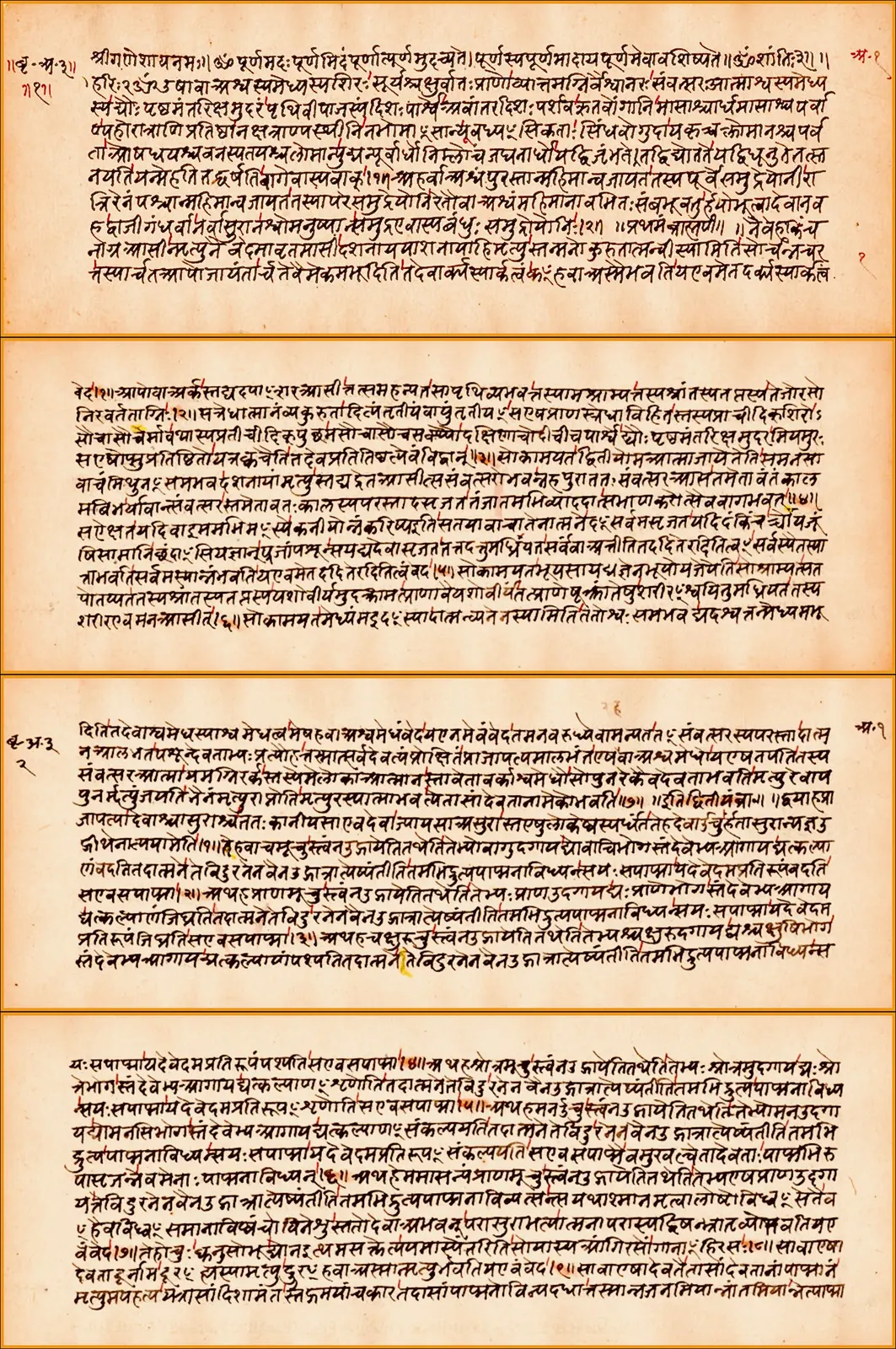
🔚 Vedanta
Upanishadic literature is commonly described as Vedanta, literally the 'end of the Veda'. This refers both to its place within the concluding portions of Vedic tradition and to its philosophical culmination.
🌌 Brahman and Atman
Brahman becomes a major concept for ultimate reality, while Atman concerns the deeper self. Their relationship forms one of the central subjects of Upanishadic thought.
✨ Famous Expressions
Tat Tvam Asi is associated with the Chandogya Upanishad. Aham Brahmasmi and Neti Neti are famously associated with the Brihadaranyaka Upanishad.
♻️ Karma, Rebirth and Moksha
Ideas concerning karma, rebirth, samsara and liberation become increasingly important in Later Vedic and Upanishadic thought.
Knowledge of the self and ultimate reality receives particular importance in discussions of liberation.
👩 Gargi and Maitreyi
Gargi Vachaknavi appears in a famous philosophical debate in the Brihadaranyaka Upanishad. Maitreyi also appears in an important dialogue with Yajnavalkya concerning wealth, immortality and knowledge.
👦 Nachiketa
The Katha Upanishad presents the famous dialogue between Nachiketa and Yama concerning death, the self and ultimate knowledge.
📚 Principal Upanishads
Frequently listed principal Upanishads include Isha, Kena, Katha, Prashna, Mundaka, Mandukya, Taittiriya, Aitareya, Chandogya and Brihadaranyaka.
The traditional enumeration of 108 Upanishads does not mean that all these texts were composed in the same historical period.
🔗 Important Associations
Aitareya is associated with the Rigveda; Brihadaranyaka and Isha with the Shukla Yajurveda; Taittiriya with the Krishna Yajurveda; Chandogya and Kena with the Samaveda; and Mundaka, Mandukya and Prashna with the Atharvaveda.
📜 Shruti
The Vedic textual corpus is traditionally classified as Shruti, meaning 'that which is heard'. This is distinguished from later categories of Smriti literature.
🏺 Historical Use of Vedic Literature
Vedic texts are religious and philosophical works rather than modern historical records. Historians therefore compare their evidence with archaeology, linguistics, geography and other sources.
🔄 The Intellectual Development
A useful memory model is:
mantra → ritual → deeper interpretation → philosophical inquiry
or:
Samhita → Brahmana → Aranyaka → Upanishad
This should be understood as an overlapping intellectual development rather than a rigid straight-line chronology.
🎯 Quick Revision
Rigveda → hymns.
Samaveda → chants.
Yajurveda → sacrificial formulas.
Atharvaveda → prayers, healing and everyday concerns.
Brahmana → ritual explanation.
Aranyaka → symbolic and contemplative interpretation.
Upanishad → philosophical inquiry.
Major ideas → Atman, Brahman, Karma, rebirth and Moksha.
📌 The Big Idea
The development of Vedic literature reflects a major intellectual movement from hymns and ritual performance toward symbolic interpretation and increasingly explicit philosophical inquiry.
These traditions overlapped, but together they provide a powerful framework for understanding the development of Vedic thought and its later influence on Indian philosophy.
Was this article helpful?
Help us improve by giving your feedback.
Test your understanding
Which is generally regarded as the oldest Vedic collection?
- A. Rigveda
- B. Samaveda
- C. Yajurveda
- D. Atharvaveda
The Rigveda is generally regarded as the oldest Vedic collection.
Which Veda is especially associated with musical chants?
- A. Atharvaveda
- B. Samaveda
- C. Yajurveda
- D. Rigveda
The Samaveda is particularly associated with chants used in sacrificial performance.
The Brahmana texts are primarily associated with what?
- A. Only warfare
- B. Only medicine
- C. Explanation of sacrifice and ritual
- D. Only trade
The Brahmanas primarily explain Vedic sacrifices and ritual procedures.
Which description of the Aranyakas is most accurate?
- A. They are only royal genealogies
- B. They are military manuals
- C. They are agricultural records
- D. They are Vedic texts that increasingly explore symbolic and contemplative meanings of ritual
The Aranyakas increasingly explore symbolic and meditative dimensions of Vedic ritual.
Why are the Upanishads commonly called Vedanta?
- A. Because they are associated with the concluding philosophical portions of the Vedic tradition
- B. Because they describe the end of wars
- C. Because they are only Vedangas
- D. Because they are tax records
Vedanta literally means the end of the Veda and refers to the concluding philosophical development of Vedic literature.
Gargi Vachaknavi and Maitreyi are especially associated with which Upanishad?
- A. Katha Upanishad
- B. Mundaka Upanishad
- C. Brihadaranyaka Upanishad
- D. Mandukya Upanishad
Both Gargi and Maitreyi appear in important philosophical dialogues of the Brihadaranyaka Upanishad.
The famous dialogue between Nachiketa and Yama occurs in which text?
- A. Aitareya Brahmana
- B. Katha Upanishad
- C. Rigveda Mandala 2
- D. Shatapatha Brahmana
The Katha Upanishad presents the dialogue between Nachiketa and Yama concerning death, the self and ultimate knowledge.
How should Samhita → Brahmana → Aranyaka → Upanishad best be understood historically?
- A. As four identical books composed at exactly the same time
- B. As each new category completely eliminating the previous one
- C. As four separate religions
- D. As a useful model of overlapping intellectual development from hymns and ritual toward symbolic interpretation and philosophical inquiry
These traditions overlap. The sequence is useful for understanding broad intellectual development but is not a rigid timeline.