
The Life of Mahavira and Jainism
The Life of Mahavira and Jainism
Mahavira was the twenty-fourth Tirthankara of the Jain tradition, not its first founder. Jain tradition places him within an older lineage that included Parshvanatha. He emphasised rigorous asceticism, non-violence, self-control and liberation from karmic bondage.
Quick Summary
Mahavira was the twenty-fourth Tirthankara of the Jain tradition, not its first founder. Jain tradition places him within an older lineage that included Parshvanatha. He emphasised rigorous asceticism, non-violence, self-control and liberation from karmic bondage.
☷ Table of Contents ⌃
- 1🧘 Who Was Mahavira?
- 2🛕 What Is a Tirthankara?
- 3👶 Early Life
- 4🗓️ Dates
- 5🚶 Renunciation
- 6🔥 Ascetic Practice
- 7✨ Kevala Jnana
- 8🗿 Later Representation
- 9👥 The Fourfold Community
- 10🐜 Ahimsa
- 11🧘 The Five Great Vows
- 12🌌 Jiva and Karma
- 13🕊️ Moksha
- 14🧠 Three Jewels
- 15🌳 Nirvana
- 16🪔 Diwali
- 17🗿 Historical Figure and Later Images
- 18📚 Jain Texts
- 19⚠️ Common Exam Mistakes
- 20📌 The Big Idea
🧘 Who Was Mahavira?
Mahavira was the twenty-fourth Tirthankara of the Jain tradition.
It is therefore misleading to describe him simply as the founder of Jainism. Jain tradition understands itself as an older Tirthankara lineage, with Parshvanatha recognised as the twenty-third Tirthankara.
🛕 What Is a Tirthankara?
A Tirthankara is a perfected spiritual teacher who shows the path across the bondage of worldly existence toward liberation.
Jain tradition recognises twenty-four Tirthankaras, beginning with Rishabhanatha or Adinatha and ending with Mahavira.
👶 Early Life
Jain tradition gives Mahavira the birth name Vardhamana. He is associated with Kundagrama in the Vaishali region and with the Jnatrika or Naya clan.
Traditional accounts name his father as Siddhartha and his mother as Trishala.
🗓️ Dates
A widely known traditional Jain chronology gives Mahavira the dates 599–527 BCE. Modern historical scholarship does not agree unanimously on these absolute dates, and some reconstructions place him later.
It is therefore safest to place Mahavira broadly within the sixth-fifth century BCE intellectual world while identifying 599–527 BCE specifically as a traditional chronology.
🚶 Renunciation
Jain tradition states that Vardhamana renounced household life at about the age of thirty and became a wandering ascetic.
🔥 Ascetic Practice
Mahavira is associated with roughly twelve years of intense austerity, fasting, meditation, silence and detachment.
In Jain thought, such discipline aims to stop new karmic bondage and remove accumulated karma from the soul.
✨ Kevala Jnana
After prolonged ascetic practice, Mahavira is said to have attained Kevala Jnana, or perfect knowledge.
He thereby became a Jina, a spiritual conqueror who had overcome passions and karmic bondage.
🗿 Later Representation
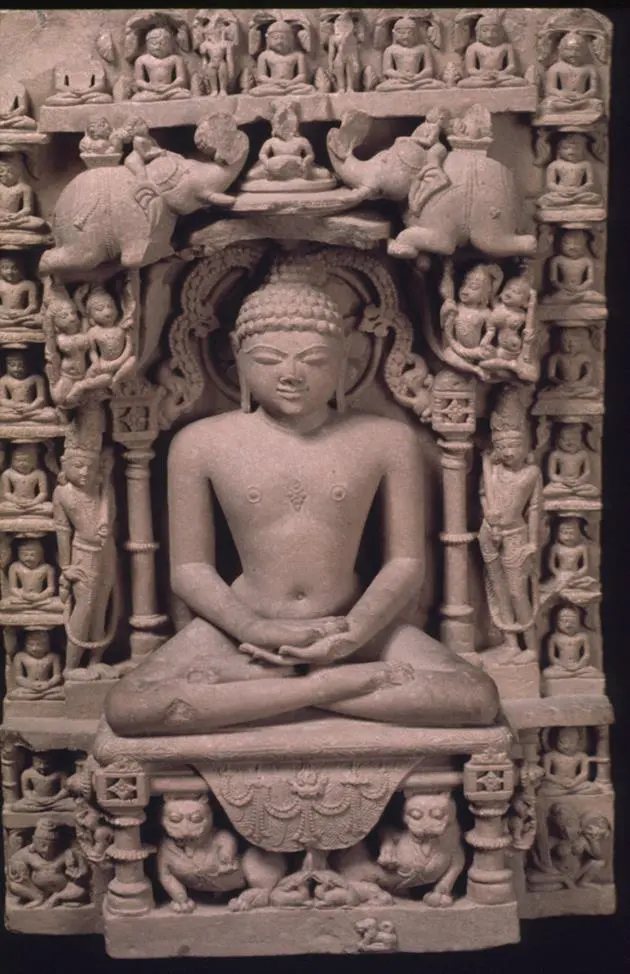
This sculpture dates from roughly the eleventh century CE and is therefore far later than Mahavira's lifetime. It represents later Jain devotional art rather than a contemporary portrait.
👥 The Fourfold Community
Jain tradition developed a fourfold community consisting of male ascetics, female ascetics, male lay followers and female lay followers.
This structure allowed both renunciants and householders to participate in Jain religious life.
🐜 Ahimsa
Non-violence became one of the most rigorous features of Jain ethics. The principle extends far beyond avoiding harm to humans and is based on a worldview in which life exists in many forms.
🧘 The Five Great Vows
The major vows later central to Jain monastic ethics are Ahimsa, Satya, Asteya, Brahmacharya and Aparigraha.
These will be examined in greater detail in the next topic.
🌌 Jiva and Karma
Jain philosophy distinguishes living soul or Jiva from non-living categories. Karma is understood in a distinctive manner as subtle material bondage attaching to the soul through action and passion.
Liberation requires the complete removal of karmic bondage.
🕊️ Moksha
When the soul becomes completely free of karma, the cycle of rebirth ends and liberation is attained.
🧠 Three Jewels
The Jain path is famously expressed through the Three Jewels: Right Faith, Right Knowledge and Right Conduct.
🌳 Nirvana
Jain tradition associates Mahavira's final liberation with Pavapuri in present-day Bihar.
The traditional Shvetambara chronology places this event in 527 BCE, although absolute chronology remains debated historically.
🪔 Diwali
For Jains, Diwali has an important association with the remembrance of Mahavira's Nirvana.
🗿 Historical Figure and Later Images
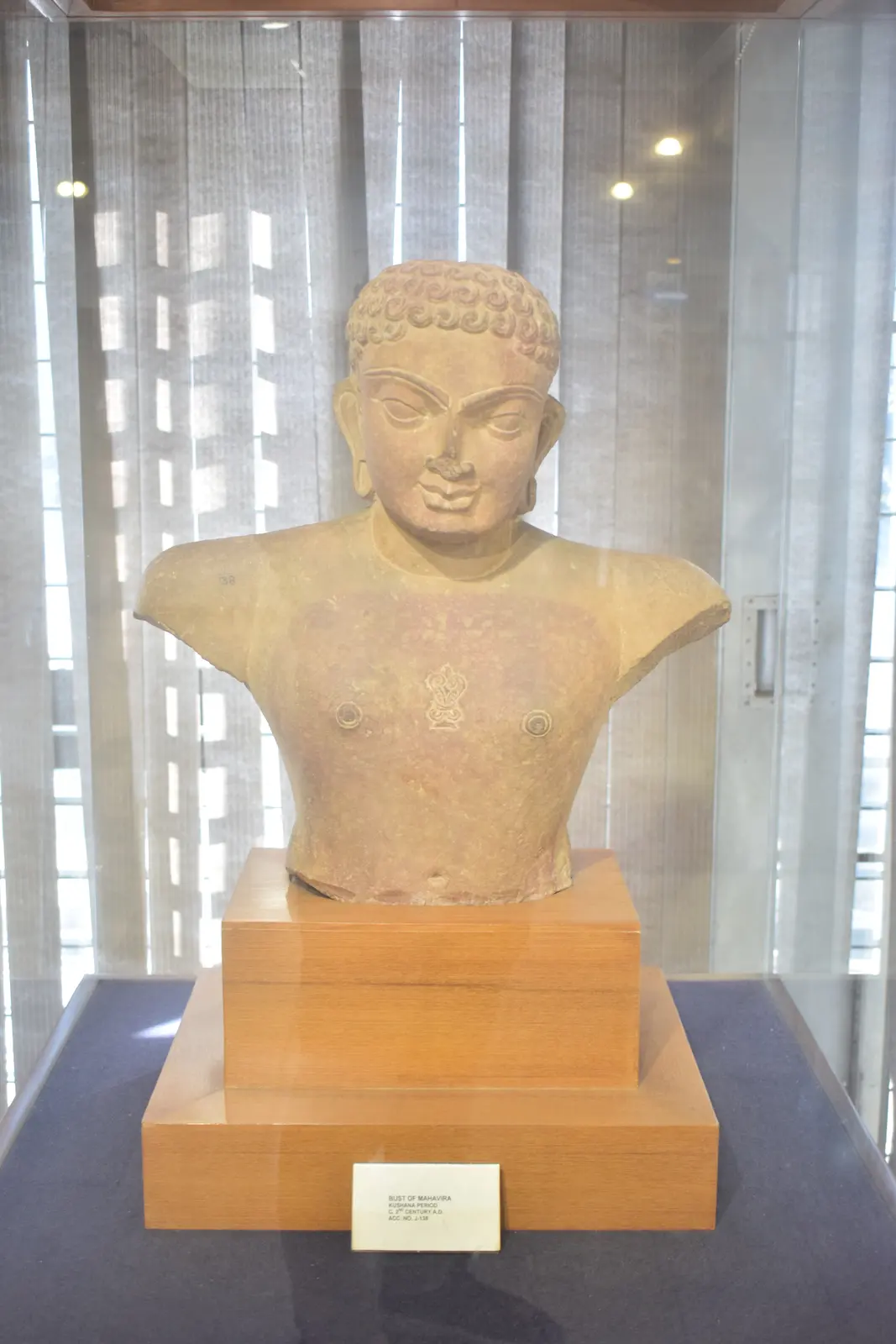
Surviving sculptures of Mahavira belong to later centuries. They provide evidence for Jain art and devotion rather than a contemporary record of Mahavira's appearance.
📚 Jain Texts
Mahavira's teachings were transmitted orally before later textual collections developed. The Shvetambara tradition preserves Agamas, while Digambara traditions take a different view of the survival of the earliest canon.
⚠️ Common Exam Mistakes
Mahavira → 24th Tirthankara.
Parshvanatha → 23rd Tirthankara.
Birth name → Vardhamana.
Traditional birthplace → Kundagrama near Vaishali.
Renunciation → traditionally around age thirty.
Perfect knowledge → Kevala Jnana.
Nirvana → Pavapuri tradition.
599–527 BCE → traditional chronology, not universally secure historical dating.
📌 The Big Idea
Mahavira should be understood as the twenty-fourth teacher in an older Jain Tirthankara tradition rather than as an isolated founder.
His historical importance lies in the powerful organisation and articulation of a path based on extreme self-discipline, non-violence, non-attachment and liberation from karmic bondage.
Was this article helpful?
Help us improve by giving your feedback.
Test your understanding
Which Tirthankara was Mahavira in the Jain tradition?
- A. First
- B. Tenth
- C. Twenty-third
- D. Twenty-fourth
Mahavira is recognised as the twenty-fourth Tirthankara.
What was Mahavira's traditional birth name?
- A. Siddhartha
- B. Vardhamana
- C. Parshva
- D. Gosala
Jain tradition gives Mahavira the birth name Vardhamana.
Who is recognised as the twenty-third Tirthankara before Mahavira?
- A. Rishabhanatha
- B. Neminatha
- C. Parshvanatha
- D. Bahubali
Parshvanatha is recognised as the twenty-third Tirthankara.
What does Kevala Jnana refer to?
- A. Complete or perfect knowledge
- B. Military conquest
- C. A type of tax
- D. A Vedic sacrifice
In Jain tradition, Kevala Jnana refers to complete or perfect knowledge.
Which place is traditionally associated with Mahavira's Nirvana?
- A. Sarnath
- B. Kushinagar
- C. Taxila
- D. Pavapuri
Jain tradition associates Mahavira's Nirvana with Pavapuri.
Why is it historically incomplete to describe Mahavira simply as the founder of Jainism?
- A. Because Mahavira was a Buddhist monk
- B. Because Jain tradition recognises earlier Tirthankaras, especially Parshvanatha
- C. Because Jainism began in the Gupta period
- D. Because Mahavira gave no teachings
Jain tradition places Mahavira as the twenty-fourth teacher within an older Tirthankara lineage.
Which is the most historically careful statement about the dates 599–527 BCE?
- A. They are exact dates proven by modern archaeology
- B. All historians agree completely on them
- C. They are widely known traditional Jain dates, while the exact historical chronology remains debated
- D. They are the dates of Ashoka's reign
599–527 BCE is a well-known traditional chronology for Mahavira, but exact historical dating remains debated.
How should a historian use later sculptures of Mahavira?
- A. As evidence for later Jain art and iconography, not as portraits made during Mahavira's lifetime
- B. To calculate Mahavira's exact height
- C. As proof that the sculptor saw Mahavira personally
- D. To reconstruct his exact facial appearance
Surviving images of Mahavira generally belong to later periods and provide evidence for Jain devotional art rather than contemporary portraiture.