
Later Vedic Period (c. 1000–600 BCE)
Later Vedic Period (c. 1000–600 BCE)
During the Later Vedic period, the centre of Vedic culture expanded eastward into the Ganga-Yamuna region. Agriculture, iron use, territorial political units, stronger kingship, elaborate sacrifices and clearer social differentiation became increasingly important.
Quick Summary
During the Later Vedic period, the centre of Vedic culture expanded eastward into the Ganga-Yamuna region. Agriculture, iron use, territorial political units, stronger kingship, elaborate sacrifices and clearer social differentiation became increasingly important.
☷ Table of Contents ⌃
- 1🌾 What Was the Later Vedic Period?
- 2📚 Sources
- 3🗺️ Eastward Expansion
- 4🏺 Painted Grey Ware
- 5🌾 Agricultural Expansion
- 6🔩 Iron Technology
- 7👥 From Jana to Janapada
- 8👑 Stronger Kingship
- 9🏛️ Assemblies
- 10💰 Tribute and Surplus
- 11👥 Varna Differentiation
- 12👩 Women and Patriarchy
- 13🔥 Elaborate Sacrifice
- 14🌌 Philosophical Development
- 15🎯 Quick Revision
- 16📌 The Big Idea
🌾 What Was the Later Vedic Period?
The period between about 1000 and 600 BCE is conventionally called the Later Vedic period. It witnessed major changes in geography, economy, politics, society and religion.
The Vedic cultural world expanded eastward, agriculture became more important, territorial political units developed and social and ritual institutions became more complex.
📚 Sources
Major sources include the later Vedas, especially the Samaveda, Yajurveda and Atharvaveda, together with the Brahmanas, Aranyakas and early Upanishads.
These texts represent different layers and purposes, so they must be read critically rather than treated as a single contemporary chronicle.
🗺️ Eastward Expansion
The geographical centre of Vedic culture increasingly shifted toward the Ganga-Yamuna region. Kuru and Panchala became major political and cultural centres, while later traditions also expanded toward Kosala and Videha.
🏺 Painted Grey Ware
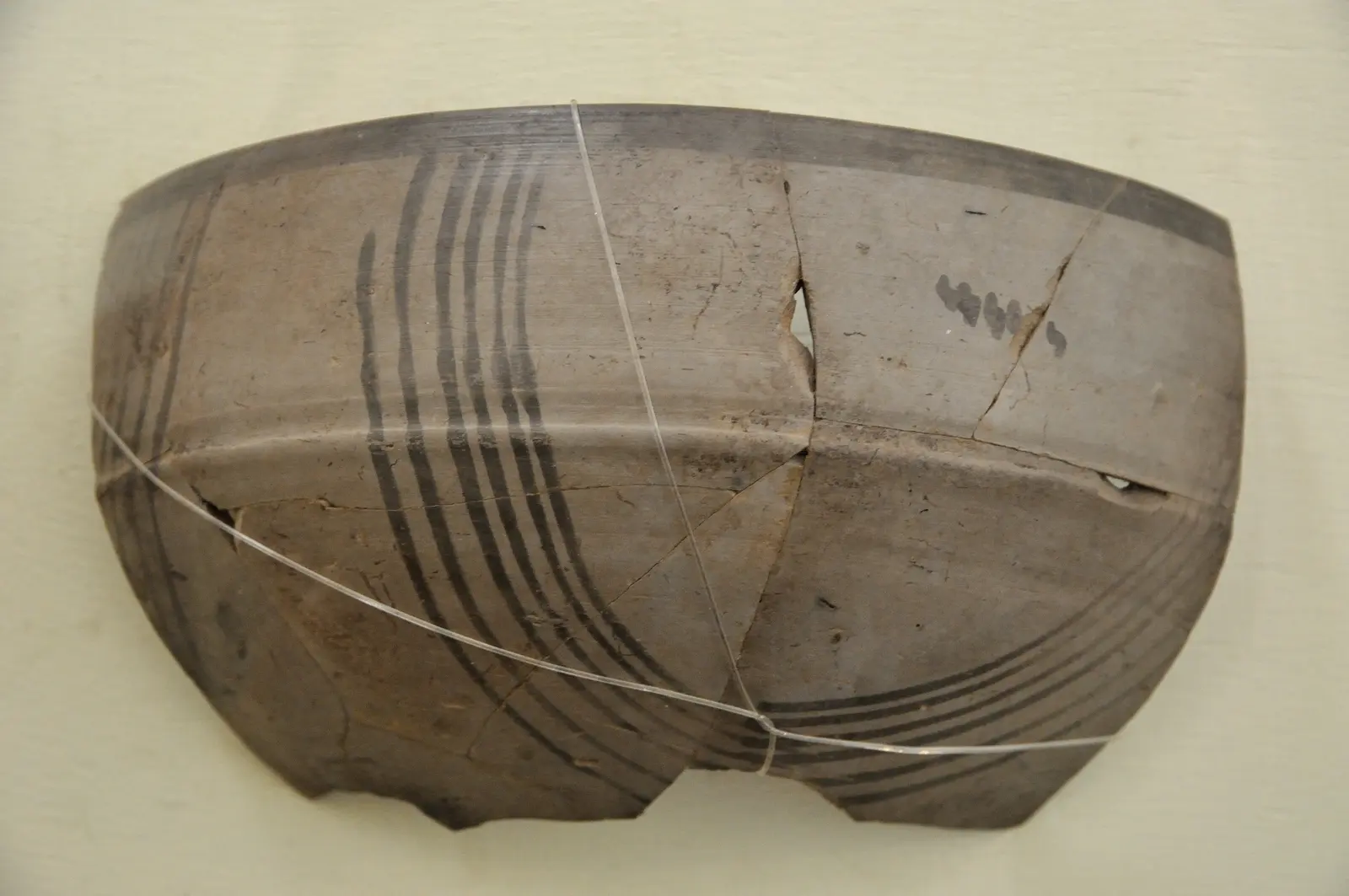
Painted Grey Ware is an archaeological pottery tradition found in many parts of the upper Ganga-Yamuna region during much of the first millennium BCE.
Its distribution overlaps with areas important in Later Vedic texts, making it useful for archaeological comparison. However, pottery should not be treated as a direct marker of ethnicity or language.
🌾 Agricultural Expansion
Agriculture became increasingly important. Fertile Gangetic plains, more permanent settlements and expanding cultivation supported larger populations and more complex economies.
Rice became especially important in eastern regions, alongside wheat and barley.
🔩 Iron Technology
Iron use became increasingly significant during the early first millennium BCE. Later Vedic texts refer to terms such as shyama ayas or krishna ayas, often associated with iron.
Iron tools could aid forest clearance and agriculture, although iron alone cannot explain the eastward expansion of settlement.
👥 From Jana to Janapada
Political identity increasingly became territorial. Earlier kin-based jana organization gradually gave way to larger territorial units that can be described as janapadas.
This transformation formed an important background to the rise of larger states in the sixth century BCE.
👑 Stronger Kingship
The authority of the rajan became stronger and more closely connected with territory, tribute and elaborate royal ritual.
Royal sacrifices such as the Rajasuya, Ashvamedha and Vajapeya enhanced royal status and political legitimacy.
🏛️ Assemblies
Sabha and Samiti continued to appear in later texts, but the balance between assemblies and royal authority changed as kingship became more powerful.
The process was gradual rather than an abrupt disappearance of collective institutions.
💰 Tribute and Surplus
Terms such as bali became associated with offerings or tribute to rulers. Agricultural surplus could support rulers, priests, craftspeople and other specialists.
This helped create the economic background for larger political units and social differentiation.
👥 Varna Differentiation
The ideological division into Brahmana, Kshatriya, Vaishya and Shudra became more explicit during the Later Vedic period.
Brahmanas gained importance through ritual specialization, Kshatriyas were linked with political and military authority, Vaishyas with production and exchange, and Shudras occupied a lower ritual position.
Actual society, however, remained more complex than a simple four-fold scheme.
👩 Women and Patriarchy
Later Vedic texts show stronger patriarchal tendencies, with greater emphasis on patrilineal succession and male control of property and ritual authority.
These texts should still not be used to assume identical conditions for all women across every region.
🔥 Elaborate Sacrifice
Sacrifices became more complex and resource-intensive. Specialized priests and correct ritual procedure became increasingly important.
The Brahmana texts explain this ritual system in great detail.
🌌 Philosophical Development
The Later Vedic period also witnessed questioning of purely external ritual. The Aranyakas and Upanishads explored knowledge, self, reality and the relationship between Atman and Brahman.
This became one of the most influential intellectual developments in Indian history.
🎯 Quick Revision
Date → c. 1000–600 BCE.
Region → Ganga-Yamuna, Kuru-Panchala.
Economy → expanding agriculture + increasing iron use.
Politics → Jana to Janapada + stronger kingship.
Society → clearer varna differentiation.
Ritual → Rajasuya, Ashvamedha, Vajapeya.
Thought → Aranyakas and Upanishads.
📌 The Big Idea
The Later Vedic period was a major transitional phase. The Vedic cultural world became more territorial, agricultural and politically centralized, while social hierarchy and ritual specialization grew.
These developments helped create the conditions for the later rise of Mahajanapadas, towns and new religious and philosophical movements.
Was this article helpful?
Help us improve by giving your feedback.
Test your understanding
What is the broad chronology of the Later Vedic period?
- A. 2600–1900 BCE
- B. 1500–1000 BCE
- C. 1000–600 BCE
- D. 322–185 BCE
The Later Vedic period is conventionally dated to about 1000–600 BCE.
Toward which region did the geographical focus of Vedic culture increasingly shift in the Later Vedic period?
- A. Only the Sindh coast
- B. The Ganga-Yamuna region
- C. Only southern India
- D. Sri Lanka
The Ganga-Yamuna region, including Kuru-Panchala, became increasingly important in the Later Vedic period.
Which pottery tradition is often important in the archaeological study of the Later Vedic period?
- A. Painted Grey Ware
- B. Roman amphora only
- C. Chinese porcelain
- D. Mughal glazed ware
Painted Grey Ware is important for studying Later Vedic archaeological contexts in the upper Ganga-Yamuna region.
Which change best represents Later Vedic political development?
- A. From Janapada back to purely nomadic Jana
- B. Complete disappearance of kings
- C. Rule only by village councils
- D. A shift from Jana-based identity toward territorial Janapadas
Political identity increasingly became territorial in the Later Vedic period.
Which of the following was a major Later Vedic royal ritual?
- A. Din-i Ilahi
- B. Sulh-i Kul
- C. Ashvamedha
- D. Iqta
The Ashvamedha was a prestigious Later Vedic royal sacrifice linked with kingship and territorial authority.
Which statement best describes the growing use of iron in the Later Vedic period?
- A. Iron was completely unknown
- B. Iron use increased and may have aided agriculture and forest clearance, but it was not the sole cause of eastward expansion
- C. Only gold tools were used
- D. Iron first appeared in the Gupta period
Iron use expanded in the early first millennium BCE, but broader historical change cannot be explained by iron alone.
What is the most cautious conclusion about varna development in Later Vedic society?
- A. The four-varna ideology became clearer, but actual society was more complex
- B. Every person's occupation was legally fixed by birth and complete records survive
- C. There was no social hierarchy
- D. The varna system began in the Mughal period
Later Vedic texts express the four-varna hierarchy more clearly, but historical society cannot be reduced to only four simple categories.
Why can the Later Vedic period be seen as a background to the rise of the Mahajanapadas?
- A. Because the Mauryan Empire already existed
- B. Because agriculture disappeared
- C. Because all political units became small nomadic groups
- D. Because agricultural expansion, territorial political units, stronger kingship and social-economic specialization created conditions for larger states
Later Vedic developments helped prepare the political and economic background for the larger states and urbanization of the sixth century BCE.