
Urban Planning and Water Management in the Indus Civilization
Urban Planning and Water Management in the Indus Civilization
Harappan cities show remarkable attention to streets, houses, drainage, wells and water storage. Mohenjo-daro developed an elaborate network of wells and drains, while Dholavira created large reservoirs to survive in an arid environment.
Quick Summary
Harappan cities show remarkable attention to streets, houses, drainage, wells and water storage. Mohenjo-daro developed an elaborate network of wells and drains, while Dholavira created large reservoirs to survive in an arid environment.
☷ Table of Contents ⌃
- 1🏙️ What Made Harappan Cities So Remarkable?
- 2🛣️ Streets and the Layout of the City
- 3🧱 Standardized Bricks and Organized Construction
- 4🏠 Houses Were Connected to the City's Water System
- 5🚰 Wells: Water Close to Where People Lived
- 6💧 Drains and Wastewater Management
- 7🛁 The Great Bath: Water on a Public Scale
- 8🏜️ Dholavira: A Different Water Problem
- 9💦 Reservoirs at Dholavira
- 10🌧️ Collecting Rain and Seasonal Water
- 11🧠 One Civilization, Different Solutions
- 12👷 What Does This Tell Us About Harappan Society?
- 13⚠️ Common Exam Traps
- 14🎯 10-Second Revision
- 15📌 The Big Idea
🏙️ What Made Harappan Cities So Remarkable?
The cities of the Indus or Harappan Civilization are famous for the way buildings, streets, drainage and water facilities were organized. During the Mature Harappan phase, roughly 2600–1900 BCE, large settlements such as Mohenjo-daro, Harappa and Dholavira developed sophisticated forms of urban infrastructure.
This does not mean every Harappan city followed exactly the same plan. Local geography mattered. Mohenjo-daro developed in the Indus plain, while Dholavira stood in the dry environment of Kutch. Harappan builders therefore used shared ideas but adapted them to different local conditions.
🛣️ Streets and the Layout of the City
Mohenjo-daro is one of the clearest examples of organized Harappan town planning. UNESCO notes that its buildings were arranged along streets that intersected in an orderly pattern, often close to right angles.
The city included larger streets as well as narrower lanes leading into residential areas. Such planning suggests that houses, roads and drains were not simply added randomly over time. Considerable coordination was required to organize construction on this scale.
However, it is better to avoid imagining that every Indus settlement followed a perfectly identical 'grid plan'. Different cities had different layouts, and urban planning changed over time.
🧱 Standardized Bricks and Organized Construction
One striking feature of Mature Harappan settlements is the widespread use of bricks made in standardized proportions. Baked bricks were particularly important in places such as Mohenjo-daro, where they were used for houses, drains, wells and major structures.
Standardization made construction more predictable and reflects shared technical traditions across widely separated settlements.
But standardized bricks do not by themselves prove that the entire civilization was ruled by one central government. They show strong cultural and technical connections; the exact political system remains uncertain.
🏠 Houses Were Connected to the City's Water System
Many houses at Mohenjo-daro were built around an inner courtyard. Several had bathing areas where water could be used inside the house.
Wastewater was often directed through small channels or drains toward larger drains along streets. This means water management operated at more than one level: inside the house, along the lane and across larger parts of the city.
This connection between private houses and public infrastructure is one of the strongest signs of organized Harappan urban life.
🚰 Wells: Water Close to Where People Lived
Mohenjo-daro is famous for the large number of wells found within the settlement. Instead of making everyone depend on one distant source, wells gave many neighbourhoods easier access to water.
Some wells appear to have served individual or small groups of houses, while others may have been used more widely.
The presence of many wells shows how important reliable access to water was in the planning of the city.
💧 Drains and Wastewater Management
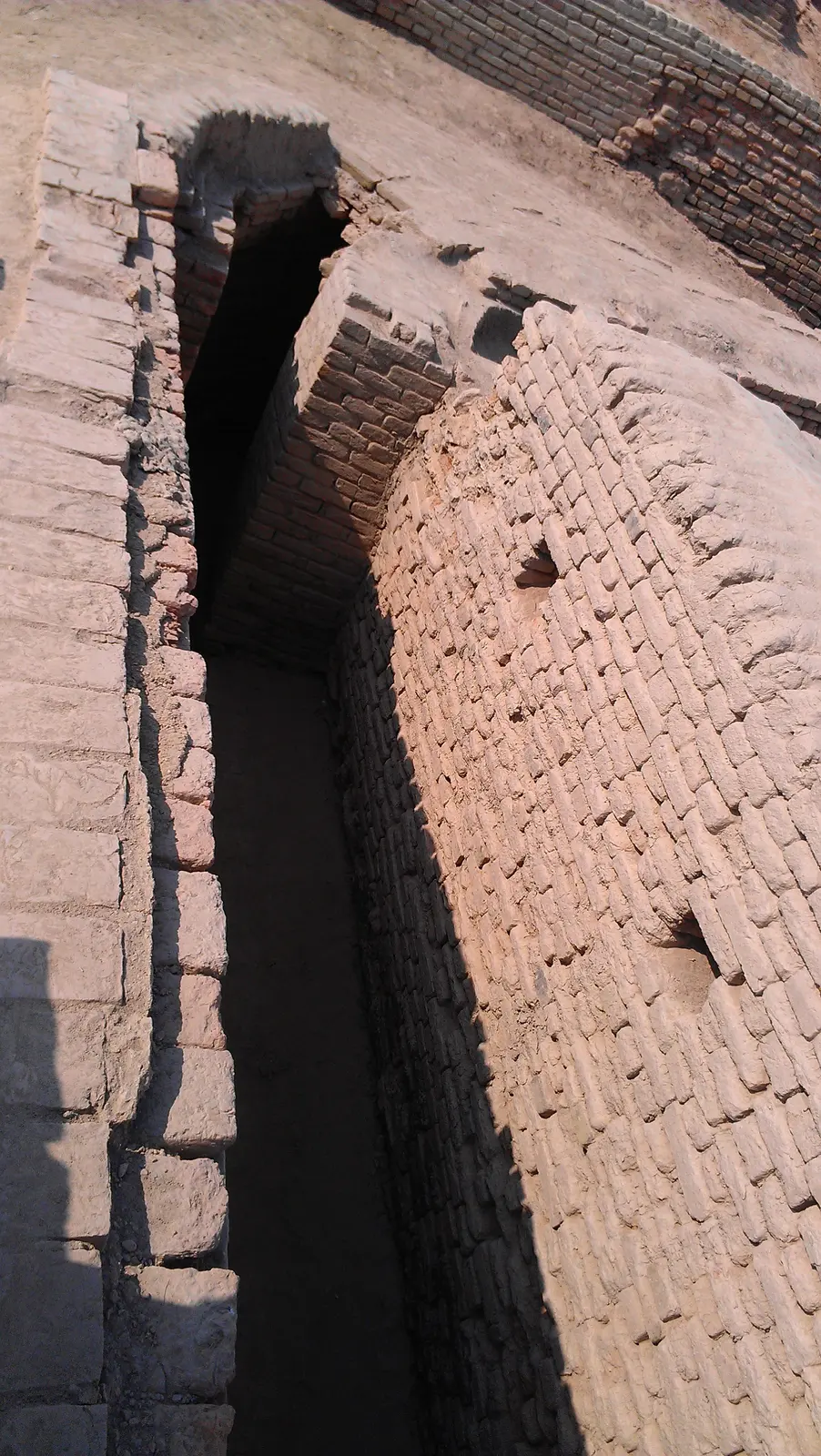
The drainage system of Mohenjo-daro is one of the best-known features of Harappan archaeology. UNESCO describes an elaborate system of drainage along with wells and soak pits for wastewater disposal.
House drains could connect to street drains. Many drains were built with bricks and some were covered. Openings or removable sections could allow access for cleaning and maintenance.
It would be misleading to call this a modern sewer system. But for a Bronze Age city, the level of attention given to wastewater movement and sanitation was highly developed.
🛁 The Great Bath: Water on a Public Scale
The Great Bath of Mohenjo-daro shows water management on a scale very different from ordinary household bathing areas.
The brick-lined tank was designed to hold water carefully, with stairs providing access. Its construction indicates special attention to making the structure relatively watertight.
Its exact purpose remains uncertain. It is often interpreted as a place for some form of collective or ritual bathing, but because Harappan writing remains undeciphered, this cannot be proved from a Harappan text.
🏜️ Dholavira: A Different Water Problem
Dholavira, located on Khadir island in present-day Gujarat, faced a very different environment. Water was scarce, and the settlement depended on seasonal streams and rainwater rather than a large perennial river beside the city.
This challenge produced one of the most impressive water-management systems in the Harappan world.
💦 Reservoirs at Dholavira
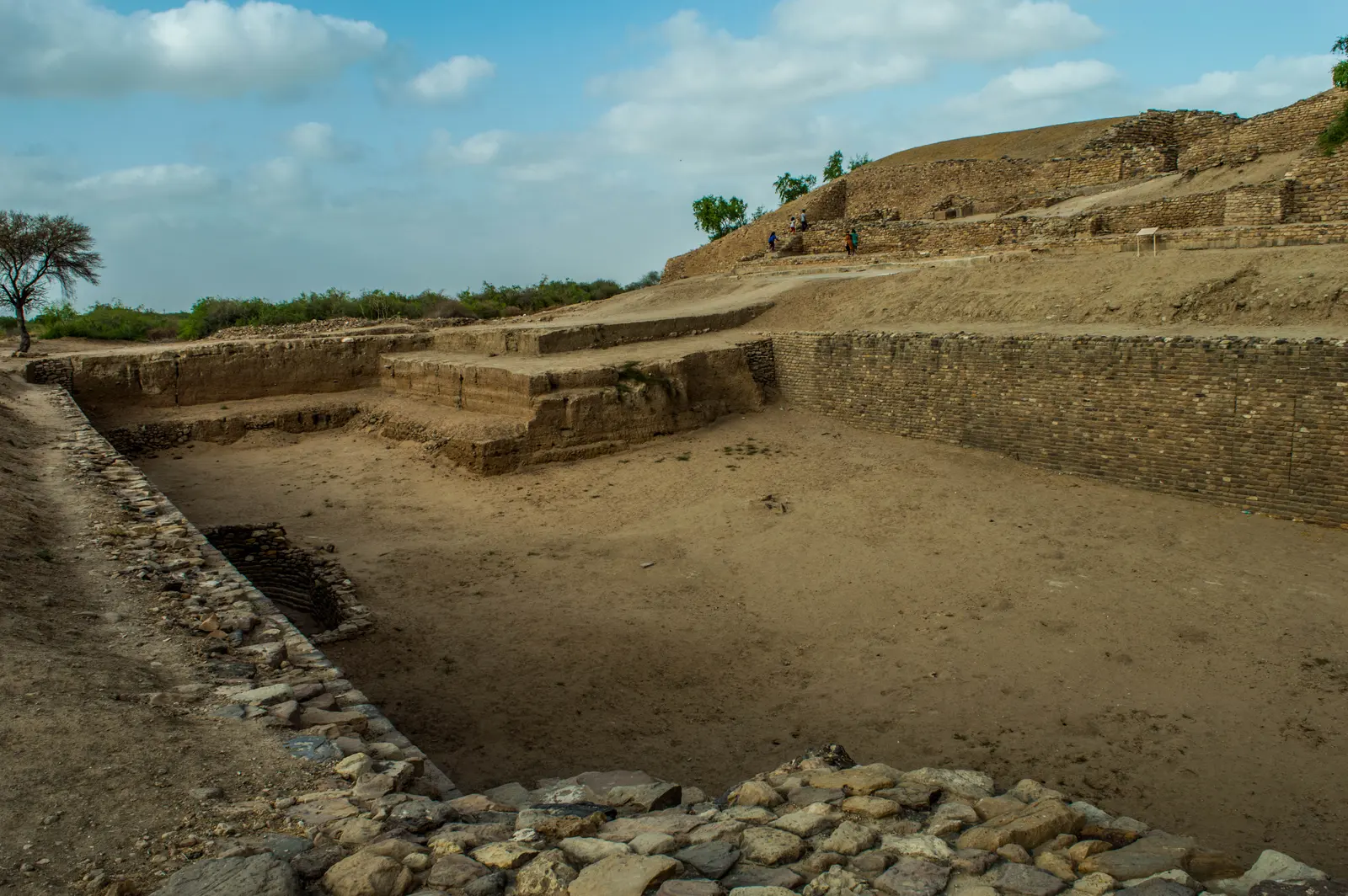
Dholavira contained a series of large reservoirs around important parts of the settlement. Channels and drains helped direct water into storage areas.
UNESCO highlights Dholavira's sophisticated water reservoirs and drainage system as one of the city's outstanding features. The inhabitants used the natural slope of the site and captured seasonal runoff to conserve water.
This shows an important difference between Harappan cities: Mohenjo-daro is especially notable for wells and drainage, while Dholavira is especially notable for harvesting and storing scarce water.
🌧️ Collecting Rain and Seasonal Water
At Dholavira, the challenge was not merely removing used water. The city first had to capture enough fresh water to survive dry periods.
Seasonal streams near the settlement were used as part of the water system. Dams, channels and reservoirs helped capture runoff and store it for later use.
Water management was therefore built into the overall plan of the city rather than treated as an afterthought.
🧠 One Civilization, Different Solutions
Comparing Mohenjo-daro and Dholavira helps us avoid an important mistake: there was no single identical Harappan city design.
Mohenjo-daro: abundant wells, bathing areas, street drains and soak pits.
Dholavira: reservoirs, channels and large-scale harvesting of seasonal water.
Both cities show careful planning, but their systems responded to different environmental conditions.
👷 What Does This Tell Us About Harappan Society?
Building streets, reservoirs, wells and drains required skilled labour and coordination. Someone had to plan dimensions, obtain materials, organize construction and maintain shared facilities.
This clearly shows substantial civic organization. But archaeology cannot yet tell us exactly who controlled that organization. We should therefore avoid jumping directly from 'planned city' to 'one powerful king'.
⚠️ Common Exam Traps
- Mohenjo-daro: wells, elaborate drainage, Great Bath.
- Dholavira: reservoirs and large-scale water harvesting.
- Harappan cities were planned, but not every city had exactly the same layout.
- Standardized bricks show shared technical practices, but do not alone prove one centralized empire.
- Harappan drainage was sophisticated, but it should not be described as identical to a modern sewer network.
- The Great Bath's ritual use is a strong interpretation, not a proven written fact.
🎯 10-Second Revision
Mohenjo-daro → wells + drains + Great Bath
Dholavira → reservoirs + rain/seasonal-water harvesting
Both → planned urban infrastructure adapted to local conditions.
📌 The Big Idea
The real achievement of Harappan town planning was not simply straight streets or brick drains. It was the ability to connect houses, streets, water supply and wastewater management into an organized urban system.
Mohenjo-daro and Dholavira also show that Harappan builders did not blindly repeat one design. They adapted their cities to local geography—an important sign of practical engineering knowledge.
Was this article helpful?
Help us improve by giving your feedback.
Test your understanding
Which Harappan city is especially famous for numerous wells and an elaborate drainage system?
- A. Dholavira
- B. Mohenjo-daro
- C. Alamgirpur
- D. Surkotada
Mohenjo-daro had numerous wells and an elaborate network of drains that formed an important part of its urban infrastructure.
Which Harappan site is especially famous for a series of large water reservoirs?
- A. Dholavira
- B. Harappa
- C. Banawali
- D. Alamgirpur
Dholavira developed a sophisticated network of reservoirs and channels to capture and store water in the dry environment of Kutch.
The Great Bath is located at which Harappan site?
- A. Kalibangan
- B. Lothal
- C. Mohenjo-daro
- D. Rakhigarhi
The Great Bath is one of the most famous structures at Mohenjo-daro.
Why did Dholavira require a particularly elaborate water-harvesting system?
- A. It received water from a large perennial river flowing through the centre of the city
- B. It was permanently flooded
- C. Its inhabitants did not use wells or reservoirs
- D. It was located in an arid environment and depended heavily on seasonal water sources
Dholavira was located in the dry Kutch environment, so capturing and storing seasonal runoff was especially important.
Which sequence best describes wastewater movement in many Harappan houses at Mohenjo-daro?
- A. Street drain → house → well
- B. House bathing area → small drain → street drain
- C. Reservoir → palace → pyramid
- D. River → granary → house roof
Wastewater from household bathing areas could pass through smaller drains and then into larger drains along streets.
What is the safest conclusion from standardized brick proportions across Harappan settlements?
- A. Every city was ruled directly by one known emperor
- B. Every building had exactly the same design
- C. Shared technical and construction traditions existed across settlements
- D. Harappans used no local building materials
Standardized brick proportions show shared technical practices and measurement traditions, but do not by themselves prove a single centralized empire.
What does comparing Mohenjo-daro and Dholavira most clearly demonstrate?
- A. Harappan cities used shared planning principles but adapted water systems to local environments
- B. Every Harappan city used exactly the same water system
- C. Dholavira had no planned infrastructure
- D. Mohenjo-daro depended entirely on large reservoirs
Mohenjo-daro relied strongly on wells and drainage, while Dholavira developed reservoirs and seasonal-water harvesting, showing adaptation to local environments.
Which statement about the Great Bath is the most historically careful?
- A. It was definitely the private swimming pool of a known Harappan king
- B. Its exact purpose is recorded in a deciphered Harappan inscription
- C. It was certainly used only for drinking water
- D. It may have had a special collective or ritual function, but its exact purpose is not proven
The Great Bath's construction suggests special use, and ritual bathing is a common interpretation, but the undeciphered script prevents certainty about its precise function.