
Discovery and Chronology of the Indus Civilization
Discovery and Chronology of the Indus Civilization
The discovery of Harappa and Mohenjo-daro in the early twentieth century revealed a previously unknown Bronze Age urban civilization. This topic explains how the civilization was recognized and how archaeologists divide its long history into Early, Mature and Late Harappan phases.
Quick Summary
The discovery of Harappa and Mohenjo-daro in the early twentieth century revealed a previously unknown Bronze Age urban civilization. This topic explains how the civilization was recognized and how archaeologists divide its long history into Early, Mature and Late Harappan phases.
☷ Table of Contents ⌃
- 1🔍 A Civilization That Had Been Forgotten
- 2🧱 Harappa Was Known Before 1921
- 3🏺 1921: Daya Ram Sahni and Harappa
- 4🏛️ 1922: Mohenjo-daro Changes the Picture
- 5⛏️ Excavations Revealed an Ancient City
- 6📢 1924: John Marshall Announces the Discovery
- 7🧠 Remember the Discovery Sequence
- 8❓ Who Actually Discovered the Indus Civilization?
- 9🏷️ Why Do We Call It the Harappan Civilization?
- 10⏳ Discovery Date Is Not the Civilization's Date
- 11🌱 Early Harappan Phase
- 12🏙️ Mature Harappan Phase
- 13🌅 Late Harappan Phase
- 14📅 Two Timelines — Never Mix Them
- 15🔬 How Is This Chronology Determined?
- 16⚠️ Common Exam Traps
- 17🎯 10-Second Revision
- 18📌 The Big Idea
🔍 A Civilization That Had Been Forgotten
Today the Harappan or Indus Civilization is counted among the great early urban civilizations of the ancient world. Yet a little more than a century ago, its true age and importance were not understood.
The ruins were not discovered in a single dramatic moment. Ancient mounds had been noticed earlier, old bricks had been removed from Harappa, and unusual seals had reached archaeologists. The larger picture became clear only when systematic excavations began in the twentieth century.
🧱 Harappa Was Known Before 1921
The mound of Harappa, in present-day Punjab in Pakistan, was known to visitors long before large-scale excavation. During nineteenth-century railway construction, ancient baked bricks from the site were even reused as building material.
This gives us an important lesson: a site can be visible for years without people understanding its real age or historical importance.
🏺 1921: Daya Ram Sahni and Harappa
A decisive step came in 1921, when Indian archaeologist Daya Ram Sahni began important excavations at Harappa under the Archaeological Survey of India.
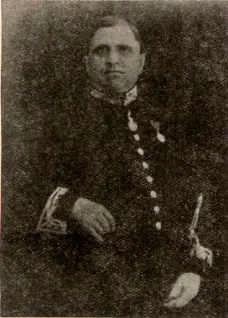
The excavations revealed structures and artefacts that pointed towards a very old and distinctive culture. Seals bearing animal figures and signs of an unknown script were particularly striking.
But Harappa alone did not yet reveal the full scale of the discovery.
🏛️ 1922: Mohenjo-daro Changes the Picture
In 1922, important discoveries associated with archaeologist Rakhal Das Banerji (R. D. Banerji) at Mohenjo-daro in Sindh made the picture much clearer.
Harappa and Mohenjo-daro were hundreds of kilometres apart, yet the remains found at the two places showed remarkable similarities. Archaeologists were no longer looking at one unusual ancient town. The evidence pointed to a much larger cultural world.
⛏️ Excavations Revealed an Ancient City
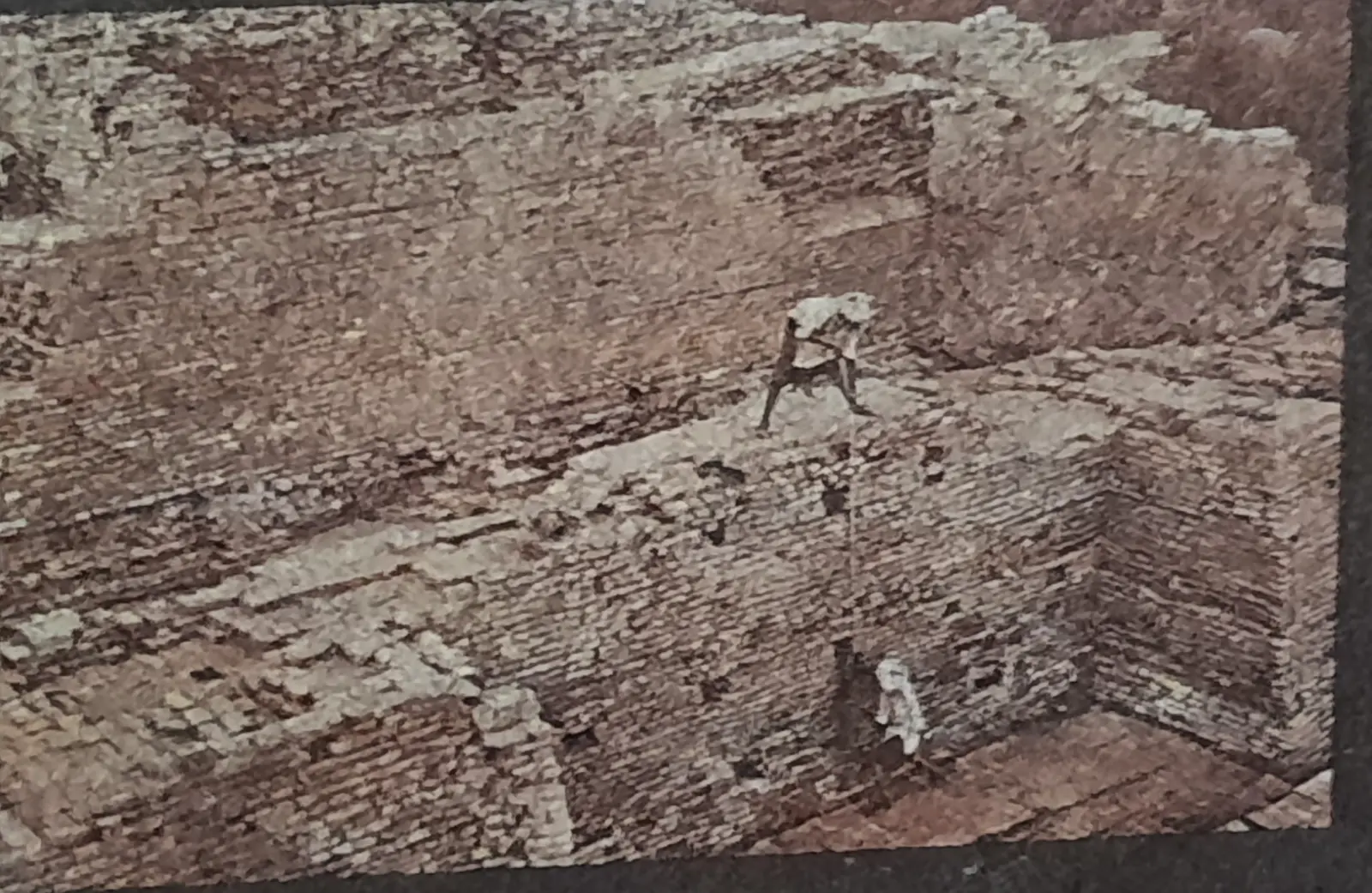
As excavation continued, substantial brick structures and other remains of organized urban life came to light. The discoveries showed that highly developed towns had existed in this region thousands of years ago.
📢 1924: John Marshall Announces the Discovery
Sir John Marshall, then Director-General of the Archaeological Survey of India, recognized the wider importance of the discoveries from Harappa and Mohenjo-daro.
In 1924, Marshall announced the newly recognized ancient civilization to the wider world.
This changed the understanding of the subcontinent's past. Urban civilization in South Asia could now be traced much further back than historians had previously realized.
🧠 Remember the Discovery Sequence
- 1921 — Daya Ram Sahni — Harappa
- 1922 — R. D. Banerji — Mohenjo-daro
- 1924 — John Marshall — announcement of the civilization
An easy memory line is: Sahni → Banerji → Marshall.
❓ Who Actually Discovered the Indus Civilization?
This question can be misleading because the discovery was a process, not the work of only one person. Earlier observers had already noticed Harappa and some of its objects. Sahni carried out important excavation at Harappa, Banerji was associated with the discoveries at Mohenjo-daro, and Marshall played the central role in announcing the significance of the newly recognized civilization.
For exams, therefore, remember the role attached to each name rather than treating all three as interchangeable.
🏷️ Why Do We Call It the Harappan Civilization?
Archaeological cultures are often named after an important site where their characteristic remains were first clearly identified. Because Harappa became the first major site associated with the recognition of this culture, the term Harappan Civilization came into use.
The term Indus Valley Civilization is also widely used. Later discoveries, however, showed that Harappan sites extended far beyond the Indus valley itself.
⏳ Discovery Date Is Not the Civilization's Date
This is the most important distinction in the whole topic. 1921, 1922 and 1924 are modern discovery-related dates. They are not dates when Harappa or Mohenjo-daro were built.
The civilization itself flourished thousands of years earlier.
🌱 Early Harappan Phase
Before the great cities reached their mature form, different communities across the wider region were already developing larger settlements, crafts, farming systems and networks of exchange.
This broad development is described as the Early Harappan phase. A useful broad range is roughly 3300–2600 BCE, although archaeological chronologies can divide this period more precisely and dates can vary by region.
🏙️ Mature Harappan Phase
The period from about 2600 to 1900 BCE is the main Mature Harappan urban phase.
Large centres such as Harappa, Mohenjo-daro and Dholavira flourished during this broader urban tradition. Planned settlements, specialized crafts, standardized objects, long-distance exchange and sophisticated management of water and drainage are among the features associated with this period.
When we casually speak of the 'height' of the Harappan Civilization, this is usually the phase we mean.
🌅 Late Harappan Phase
After about 1900 BCE, the mature urban system underwent major changes. Large urban centres lost some of their earlier importance, settlement patterns changed and regional differences became stronger.
The broad Late Harappan phase continued in different forms into the second millennium BCE, with a commonly used broad endpoint around 1300 BCE.
So it is misleading to imagine that the entire civilization suddenly vanished everywhere in 1900 BCE. It was a longer process of transformation.
📅 Two Timelines — Never Mix Them
Modern discovery:
1921 CE — Harappa excavation associated with Sahni
1922 CE — Mohenjo-daro discoveries associated with Banerji
1924 CE — Marshall's announcement
Ancient chronology:
Early Harappan — broadly before 2600 BCE
Mature Harappan — c. 2600–1900 BCE
Late Harappan — c. 1900–1300 BCE
🔬 How Is This Chronology Determined?
Harappan writing has not yet been securely deciphered, so archaeologists cannot simply read a Harappan history book containing dates.
Instead, chronology is reconstructed through evidence such as archaeological layers, pottery and artefact styles, relationships between sites and radiocarbon dating.
That is also why archaeological dates are often written with words such as circa (c.) or 'approximately'. They represent the best reconstruction from available evidence rather than an exact calendar date for every settlement.
⚠️ Common Exam Traps
- 1921 is associated with important excavation at Harappa; it is not the date Harappa was founded.
- Daya Ram Sahni is associated with Harappa and R. D. Banerji with Mohenjo-daro.
- John Marshall is especially associated with the 1924 announcement.
- The Mature Harappan urban phase is broadly dated to c. 2600–1900 BCE.
- The Harappan Civilization extended beyond the Indus valley.
- Its decline was a process of change, not necessarily a single sudden event everywhere.
🎯 10-Second Revision
Discovery: 1921 Sahni → 1922 Banerji → 1924 Marshall.
Chronology: Early → Mature → Late; the major mature urban phase was approximately 2600–1900 BCE.
📌 The Big Idea
The discovery of Harappa and Mohenjo-daro did not merely add two old cities to history. It revealed that a vast urban civilization had flourished in the northwestern subcontinent thousands of years ago.
The story is therefore about two things at once: how modern archaeology rediscovered the civilization and how archaeologists reconstructed its ancient chronology.
Was this article helpful?
Help us improve by giving your feedback.
Test your understanding
Who is associated with the important excavation at Harappa in 1921?
- A. Daya Ram Sahni
- B. R. D. Banerji
- C. John Marshall
- D. Mortimer Wheeler
Daya Ram Sahni led important excavations at Harappa in 1921.
R. D. Banerji is associated with important discoveries at which Harappan site in 1922?
- A. Harappa
- B. Mohenjo-daro
- C. Dholavira
- D. Lothal
R. D. Banerji is associated with important discoveries at Mohenjo-daro in 1922.
What important event related to the Indus Civilization occurred in 1924?
- A. Harappa was founded
- B. The Indus script was deciphered
- C. John Marshall announced the newly recognized civilization
- D. The Mature Harappan phase began
In 1924 John Marshall announced the newly recognized ancient Indus Civilization to the wider world.
Which sequence correctly represents the modern discovery story?
- A. Banerji → Sahni → Marshall
- B. Sahni → Banerji → Marshall
- C. Marshall → Sahni → Banerji
- D. Sahni → Marshall → Banerji
The useful sequence is Sahni at Harappa in 1921, Banerji associated with Mohenjo-daro in 1922, and Marshall's announcement in 1924.
Which period represents the main Mature Harappan urban phase?
- A. c. 7000–5500 BCE
- B. c. 3300–2600 BCE
- C. c. 2600–1900 BCE
- D. c. 1200–600 BCE
The Mature Harappan phase, approximately 2600–1900 BCE, represents the civilization's major urban phase.
Why can 1921 not be treated as the beginning of the Harappan Civilization?
- A. Because Harappa was discovered in 1947
- B. Because no excavation occurred in 1921
- C. Because Harappa belonged to the medieval period
- D. Because 1921 is a modern excavation date and the ancient settlement was thousands of years older
1921 refers to important modern excavation at Harappa, not to the founding of the ancient settlement.
Which statement best describes the change after about 1900 BCE?
- A. Every Harappan settlement disappeared at exactly the same time
- B. The mature urban system underwent a longer process of transformation and increasing regional variation
- C. Harappan urbanization began for the first time
- D. All Harappan settlements became larger cities
The post-1900 BCE evidence is better understood as a longer transformation of the mature urban system, with changing settlements and greater regional variation.
Why are Harappan chronological dates usually treated as approximate?
- A. They are reconstructed from archaeological and scientific evidence rather than a readable Harappan historical record
- B. Ancient people did not experience time
- C. John Marshall deliberately removed all dates
- D. Radiocarbon dating can only be used for medieval sites
Harappan chronology is reconstructed from archaeological layers, artefacts, comparisons and scientific dating because the Harappan script has not been securely deciphered.