
Major Sites of the Indus Civilization and Their Key Features for Exams
Major Sites of the Indus Civilization and Their Key Features for Exams
Harappa, Mohenjo-daro, Dholavira, Lothal, Kalibangan, Rakhigarhi and several smaller sites reveal different aspects of the Indus Civilization. For exams, the key is to connect each site with its location and distinctive archaeological discoveries.
Quick Summary
Harappa, Mohenjo-daro, Dholavira, Lothal, Kalibangan, Rakhigarhi and several smaller sites reveal different aspects of the Indus Civilization. For exams, the key is to connect each site with its location and distinctive archaeological discoveries.
☷ Table of Contents ⌃
- 1🎯 Why Is This Topic Important for Exams?
- 2🏺 1. Harappa — The Site That Gave the Civilization Its Name
- 3🏙️ 2. Mohenjo-daro — The Great Bath
- 4💧 3. Dholavira — The Master of Water Management
- 5⚓ 4. Lothal — Maritime Trade and the Famous Basin
- 6🔥 5. Kalibangan — Ploughed Field and Fire-altar Interpretation
- 7🏘️ 6. Rakhigarhi — One of the Largest Harappan Sites
- 8🧿 7. Chanhudaro — Craft Production Centre
- 9🐚 8. Nageshwar — Shell Working
- 10🌊 9. Balakot — Coastal Craft Activity
- 11🧭 10. Sutkagendor — Far Western Harappan Settlement
- 12🌾 11. Banawali — Haryana
- 13🗺️ 12. Alamgirpur — Eastern Reach
- 14🌴 13. Daimabad — Southern Reach
- 15🧠 The Most Important Site–Feature Pairs
- 16⚠️ Common Exam Traps
- 17🎯 20-Second Revision
- 18📌 The Big Idea
🎯 Why Is This Topic Important for Exams?
Questions on the Indus or Harappan Civilization often test a simple but confusing skill: matching an archaeological site with its correct feature.
Which site had the Great Bath? Where was the ploughed field found? Which site is famous for reservoirs? Which settlement is associated with a dockyard interpretation? Which site was an important craft-production centre?
This chapter brings the major sites together so that they can be revised without mixing them up.
🏺 1. Harappa — The Site That Gave the Civilization Its Name
Harappa is located in present-day Punjab, Pakistan, near the Ravi River.
It was one of the first major sites whose excavation helped archaeologists recognize the existence of this ancient civilization. Because Harappa was identified early, the civilization is also called the Harappan Civilization.
Important finds and features associated with Harappa include planned settlement areas, seals, standardized weights, craft activity, burials and large brick structures traditionally described as granary-related structures.
Exam memory: Harappa → Ravi → Pakistan → civilization named after this site.
🏙️ 2. Mohenjo-daro — The Great Bath
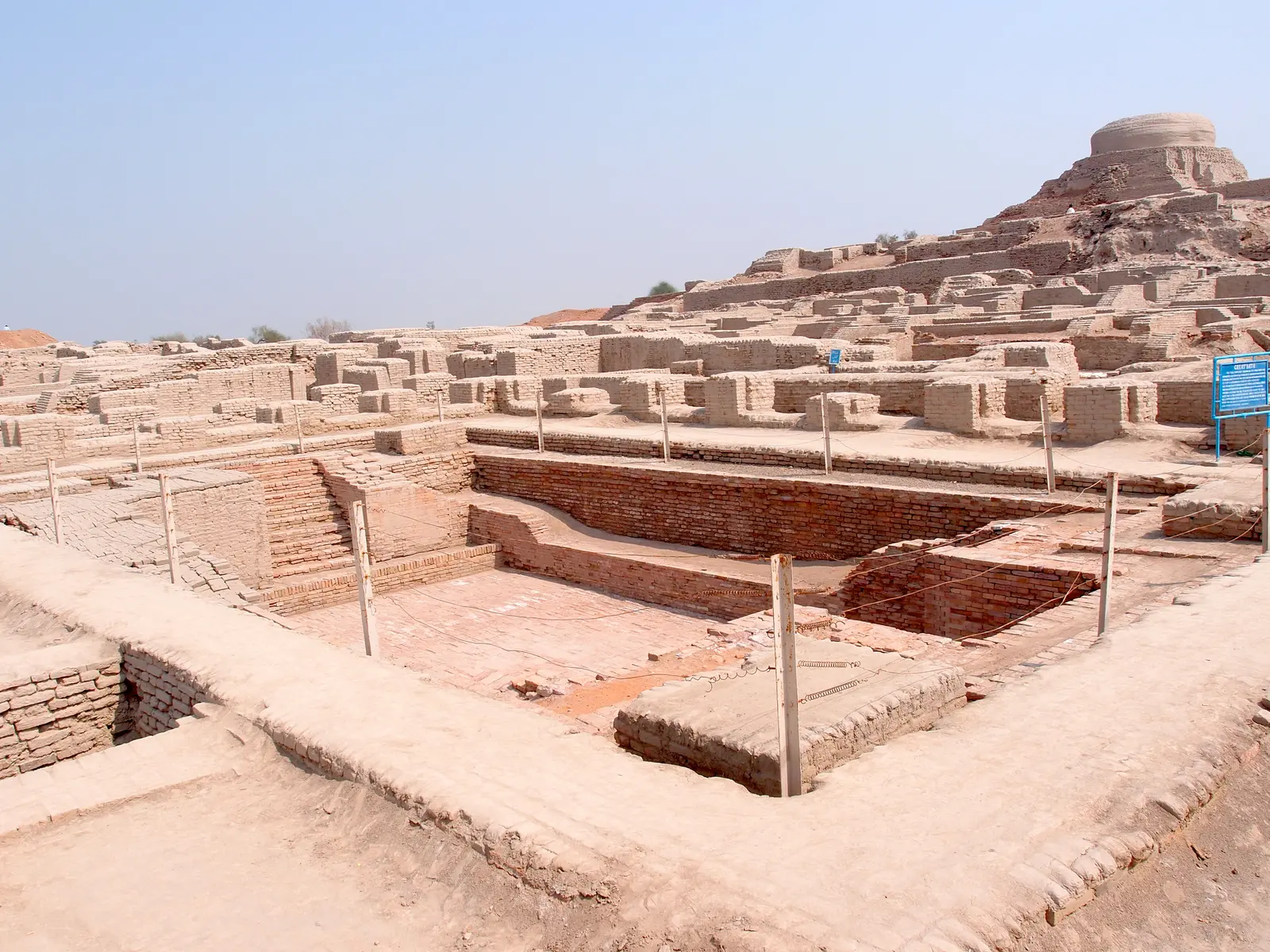
Mohenjo-daro is in Sindh, Pakistan, near the Indus River.
Its most famous structure is the Great Bath, a carefully constructed brick-lined tank with sophisticated waterproofing and access arrangements.
Mohenjo-daro is also associated with the famous bronze Dancing Girl, the stone sculpture commonly called the Priest-King, numerous seals and an impressive drainage system.
Exam memory: Mohenjo-daro → Great Bath + Dancing Girl + Priest-King.
💧 3. Dholavira — The Master of Water Management
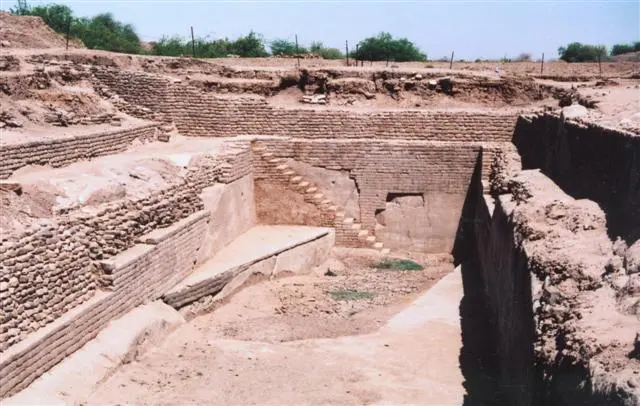
Dholavira is located on Khadir island in the Rann of Kutch, Gujarat.
The site is especially famous for its sophisticated water-management system. Large reservoirs, channels and carefully planned structures helped store and manage water in a relatively dry environment.
Dholavira is also notable for its distinctive urban layout and a famous large inscription or signboard made with Indus signs.
Exam memory: Dholavira → Gujarat → reservoirs + water management + signboard.
⚓ 4. Lothal — Maritime Trade and the Famous Basin
Lothal is located in Gujarat.
It is famous for a large brick-lined basin traditionally interpreted as a dockyard. This interpretation has made Lothal one of the best-known examples of Harappan maritime activity, although the exact function of the basin has been debated.
The site also provides evidence of bead-making, craft production, trade and standardized weights.
Exam memory: Lothal → Gujarat → dockyard interpretation + bead-making + maritime trade.
🔥 5. Kalibangan — Ploughed Field and Fire-altar Interpretation
Kalibangan is located in Rajasthan, on the Ghaggar river system.
Its most famous archaeological discovery is evidence interpreted as a ploughed field. Parallel furrows preserved in the ground provide rare evidence connected with ancient agricultural practice.
Some structures at Kalibangan have also been interpreted as fire altars.
The site contains evidence belonging to both pre-Harappan and Mature Harappan phases.
Exam memory: Kalibangan → Rajasthan → ploughed field + interpreted fire altars.
🏘️ 6. Rakhigarhi — One of the Largest Harappan Sites
Rakhigarhi is located in Haryana, India.
Its extensive mounds and settlement remains make it one of the largest known Harappan sites.
Excavations have revealed habitation areas, drainage, craft activities, burials and other features of Harappan urban life.
Rakhigarhi has become particularly important in modern archaeological research because of continuing excavations and studies of human remains.
Exam memory: Rakhigarhi → Haryana → one of the largest Harappan sites.
🧿 7. Chanhudaro — Craft Production Centre
Chanhudaro was located in Sindh.
It was smaller than Harappa or Mohenjo-daro but was an important centre of specialized production.
Archaeological evidence connects the site with bead-making, shell-working, seals and other crafts.
For exams, Chanhudaro is especially useful as an example of a Harappan settlement strongly associated with craft specialization.
Exam memory: Chanhudaro → craft centre → bead-making.
🐚 8. Nageshwar — Shell Working
Nageshwar in Gujarat was located close to marine resources.
The site is particularly associated with the working of shell. Harappan craftspeople used marine shells to make ornaments and other objects.
Its location demonstrates how Harappan production centres could develop close to the raw materials they needed.
Exam memory: Nageshwar → Gujarat → shell-working.
🌊 9. Balakot — Coastal Craft Activity
Balakot, in present-day Pakistan, was another settlement linked with coastal resources and shell-working.
Together with sites such as Nageshwar, it helps historians understand the supply of marine raw materials to the wider Harappan craft network.
Exam memory: Balakot → coastal settlement + shell craft.
🧭 10. Sutkagendor — Far Western Harappan Settlement
Sutkagendor was located close to the Makran coast, near the present Pakistan-Iran border region.
Its western location is important because it shows how far Harappan settlements and trade connections extended toward routes leading to Iran and the Persian Gulf.
Exam memory: Sutkagendor → far west → Makran region → trade-route significance.
🌾 11. Banawali — Haryana
Banawali is an important Harappan site in Haryana.
The site contains evidence of both earlier and Mature Harappan occupation and helps show the spread of Harappan culture into the Ghaggar-Hakra region.
Exam memory: Banawali → Haryana → Early + Mature Harappan phases.
🗺️ 12. Alamgirpur — Eastern Reach
Alamgirpur in Uttar Pradesh is important for understanding the eastern spread of the Harappan cultural tradition.
It represents a late Harappan presence toward the upper Ganga-Yamuna Doab region.
Exam memory: Alamgirpur → Uttar Pradesh → eastern Harappan reach.
🌴 13. Daimabad — Southern Reach
Daimabad in Maharashtra is frequently discussed in relation to the southern extent of Late Harappan cultural influence.
The site is also famous for remarkable bronze objects discovered there, although their precise cultural and chronological interpretation needs to be handled carefully.
Exam memory: Daimabad → Maharashtra → southern extent.
🧠 The Most Important Site–Feature Pairs
Harappa → Ravi River + civilization's name
Mohenjo-daro → Great Bath
Dholavira → reservoirs and water management
Lothal → dockyard interpretation and maritime trade
Kalibangan → ploughed field
Rakhigarhi → Haryana + one of the largest sites
Chanhudaro → bead-making and craft production
Nageshwar → shell-working
Alamgirpur → eastern reach
Daimabad → southern reach
⚠️ Common Exam Traps
- Great Bath belongs to Mohenjo-daro, not Harappa.
- Ploughed field is associated with Kalibangan.
- Dholavira is especially famous for reservoirs and water management.
- Lothal is associated with the famous structure interpreted as a dockyard.
- Rakhigarhi is in Haryana, not Rajasthan.
- Kalibangan is in Rajasthan.
- Dholavira and Lothal are both in Gujarat, but their famous features are different.
- Priest-King and Dancing Girl are associated with Mohenjo-daro.
🎯 20-Second Revision
Mohenjo-daro → Great Bath.
Dholavira → Water reservoirs.
Lothal → Dockyard interpretation.
Kalibangan → Ploughed field.
Rakhigarhi → Haryana.
Chanhudaro → Crafts and beads.
Nageshwar → Shell-working.
Alamgirpur → East.
Daimabad → South.
📌 The Big Idea
No single Harappan site tells us the whole story of the civilization. Mohenjo-daro helps us understand large-scale urbanism, Dholavira reveals extraordinary water management, Lothal highlights trade and craft activity, Kalibangan preserves agricultural evidence and sites such as Rakhigarhi show the enormous geographical spread of Harappan settlement.
For examinations, the easiest strategy is therefore simple: remember each major site together with one or two distinctive archaeological features.
Was this article helpful?
Help us improve by giving your feedback.
Test your understanding
The Great Bath was discovered at which Harappan site?
- A. Harappa
- B. Mohenjo-daro
- C. Kalibangan
- D. Lothal
The Great Bath is the most famous monumental structure discovered at Mohenjo-daro.
Which Harappan site is especially famous for its reservoirs and water-management system?
- A. Chanhudaro
- B. Harappa
- C. Dholavira
- D. Alamgirpur
Dholavira had an exceptionally developed system of reservoirs, channels and water storage.
Evidence interpreted as a ploughed field was found at which site?
- A. Kalibangan
- B. Mohenjo-daro
- C. Rakhigarhi
- D. Nageshwar
Kalibangan is famous for archaeological evidence interpreted as an ancient ploughed field.
Which Harappan site is located in Haryana and is among the largest known Harappan settlements?
- A. Lothal
- B. Dholavira
- C. Mohenjo-daro
- D. Rakhigarhi
Rakhigarhi in Haryana is one of the largest known Harappan archaeological sites.
Which site is especially associated with bead-making and specialized craft production?
- A. Alamgirpur
- B. Chanhudaro
- C. Kalibangan
- D. Sutkagendor
Chanhudaro is particularly well known as a Harappan centre of specialized crafts including bead-making.
The large basin traditionally interpreted as a dockyard is associated with which site?
- A. Harappa
- B. Banawali
- C. Lothal
- D. Rakhigarhi
Lothal contains a large brick-lined basin traditionally interpreted as a dockyard, although its exact function has been debated.
Which site is especially important for understanding the eastern reach of Late Harappan culture?
- A. Alamgirpur
- B. Mohenjo-daro
- C. Balakot
- D. Sutkagendor
Alamgirpur in Uttar Pradesh is important evidence for the eastward spread of Late Harappan cultural traditions.
Which set of site-feature pairs is correctly matched?
- A. Mohenjo-daro—ploughed field; Kalibangan—Great Bath
- B. Rakhigarhi—dockyard; Lothal—Great Bath
- C. Dholavira—Dancing Girl; Harappa—water reservoirs
- D. Mohenjo-daro—Great Bath; Kalibangan—ploughed field; Dholavira—reservoirs
The correct associations are Mohenjo-daro with the Great Bath, Kalibangan with the ploughed field and Dholavira with its sophisticated reservoirs.
Which pair best demonstrates the geographical eastern and southern reach of Late Harappan traditions?
- A. Harappa and Mohenjo-daro
- B. Alamgirpur and Daimabad
- C. Lothal and Dholavira
- D. Chanhudaro and Balakot
Alamgirpur in Uttar Pradesh is important for the eastern reach, while Daimabad in Maharashtra is discussed in relation to the southern extent of Late Harappan cultural influence.
Why should the Lothal basin be described carefully in a modern history article?
- A. Because no basin was actually found there
- B. Because Lothal is located in Pakistan
- C. Because its interpretation as a dockyard is famous but its exact function has been debated
- D. Because it belongs to the Gupta period
The brick-lined basin at Lothal is traditionally interpreted as a dockyard, but careful historical writing distinguishes this interpretation from an absolutely certain identification.