
Religion and Beliefs in the Indus Civilization: What Does Archaeology Tell Us?
Religion and Beliefs in the Indus Civilization: What Does Archaeology Tell Us?
The religion of the Indus Civilization cannot be reconstructed with certainty because its script remains undeciphered. Archaeologists therefore rely on seals, figurines, unusual structures, burials and symbolic motifs, but many older interpretations remain debated.
Quick Summary
The religion of the Indus Civilization cannot be reconstructed with certainty because its script remains undeciphered. Archaeologists therefore rely on seals, figurines, unusual structures, burials and symbolic motifs, but many older interpretations remain debated.
☷ Table of Contents ⌃
- 1🧩 A Religion Without Readable Texts
- 2⚠️ Evidence and Interpretation Are Not the Same Thing
- 3🦌 The Famous So-Called Pashupati Seal
- 4🧘 Does the Seal Prove Yoga Existed?
- 5👩 Female Figurines and the 'Mother Goddess' Theory
- 6🌳 Trees on Harappan Seals
- 7🐂 Animals and Sacred Symbolism
- 8🦄 The Unicorn Motif
- 9🔥 Fire Altars?
- 10🛁 Was the Great Bath Religious?
- 11🏛️ Where Are the Harappan Temples?
- 12⚱️ Burials and Beliefs About Death
- 13💀 Were There Many Different Burial Practices?
- 14🪬 Amulets and Small Objects
- 15👑 The 'Priest-King' Problem
- 16🔗 Can Harappan Religion Be Directly Linked to Later Hinduism?
- 17🔍 What Can We Say With Confidence?
- 18🧠 Evidence vs Interpretation
- 19⚠️ Common Exam Traps
- 20🎯 10-Second Revision
- 21📌 The Big Idea
🧩 A Religion Without Readable Texts
Understanding religion in the Indus or Harappan Civilization is difficult because the Indus script has not yet been securely deciphered. We do not possess readable hymns, prayers, temple inscriptions or religious books written by the Harappans themselves.
As a result, archaeologists study seals, figurines, buildings, burials, animal motifs, trees and unusual objects and then try to interpret what they may have meant.
This creates an important rule for studying Harappan religion: archaeological evidence is real, but its religious meaning is often uncertain.
⚠️ Evidence and Interpretation Are Not the Same Thing
Suppose archaeologists find a female figurine. The fact that the figurine exists is evidence. Calling it a 'Mother Goddess' is an interpretation.
Similarly, a seal showing a seated figure surrounded by animals is archaeological evidence. Calling that figure 'Shiva' or 'Pashupati' is an interpretation that has been debated by scholars.
This distinction is extremely important because many older textbooks presented interpretations as if they were proven facts.
🦌 The Famous So-Called Pashupati Seal
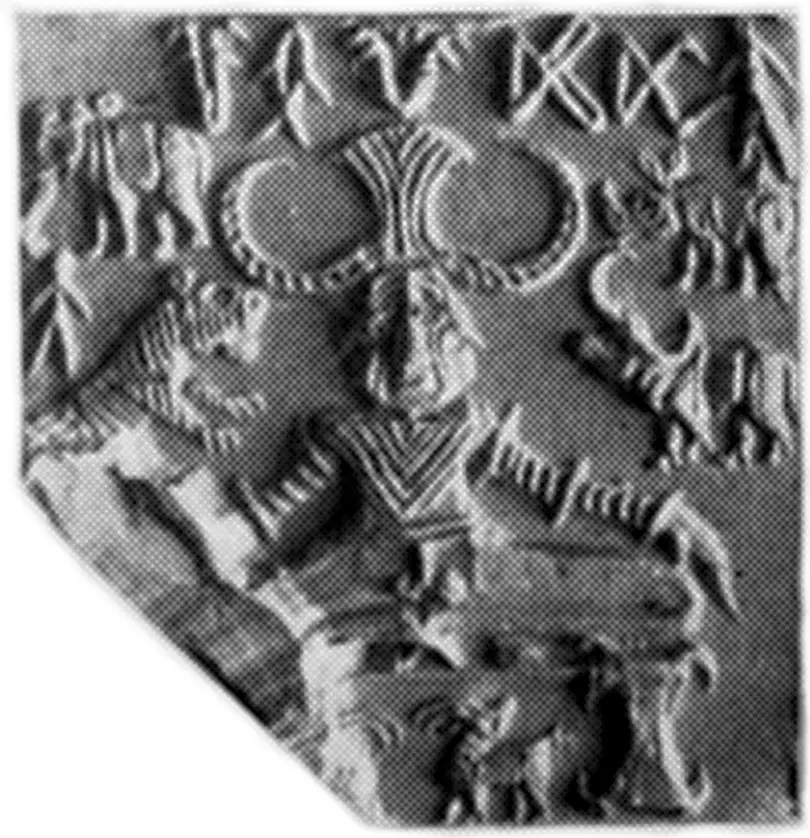
One of the most famous Harappan objects is a seal from Mohenjo-daro showing a central seated figure with animals around it. The figure appears to wear a horned headdress and sits in a posture that some early scholars compared with a yogic pose.
Sir John Marshall famously suggested that this might represent an early form of Shiva as Pashupati, 'Lord of Animals'.
This interpretation became very popular, but it is not proven. Because the inscription cannot be read, we do not know the identity of the figure or what the scene meant to the Harappans.
The safest statement is: the seal shows a seated horned figure associated visually with animals; its identification with Shiva or Pashupati remains a scholarly interpretation.
🧘 Does the Seal Prove Yoga Existed?
The posture of the central figure has often been described as yogic. This has led to claims that yoga existed in the Harappan Civilization.
But a seated posture alone cannot prove the existence of the later philosophical and religious system known as Yoga.
It is reasonable to say that the figure is shown in an unusual seated posture. It is much less certain to say that the person was definitely practising yoga in the later historical sense.
👩 Female Figurines and the 'Mother Goddess' Theory
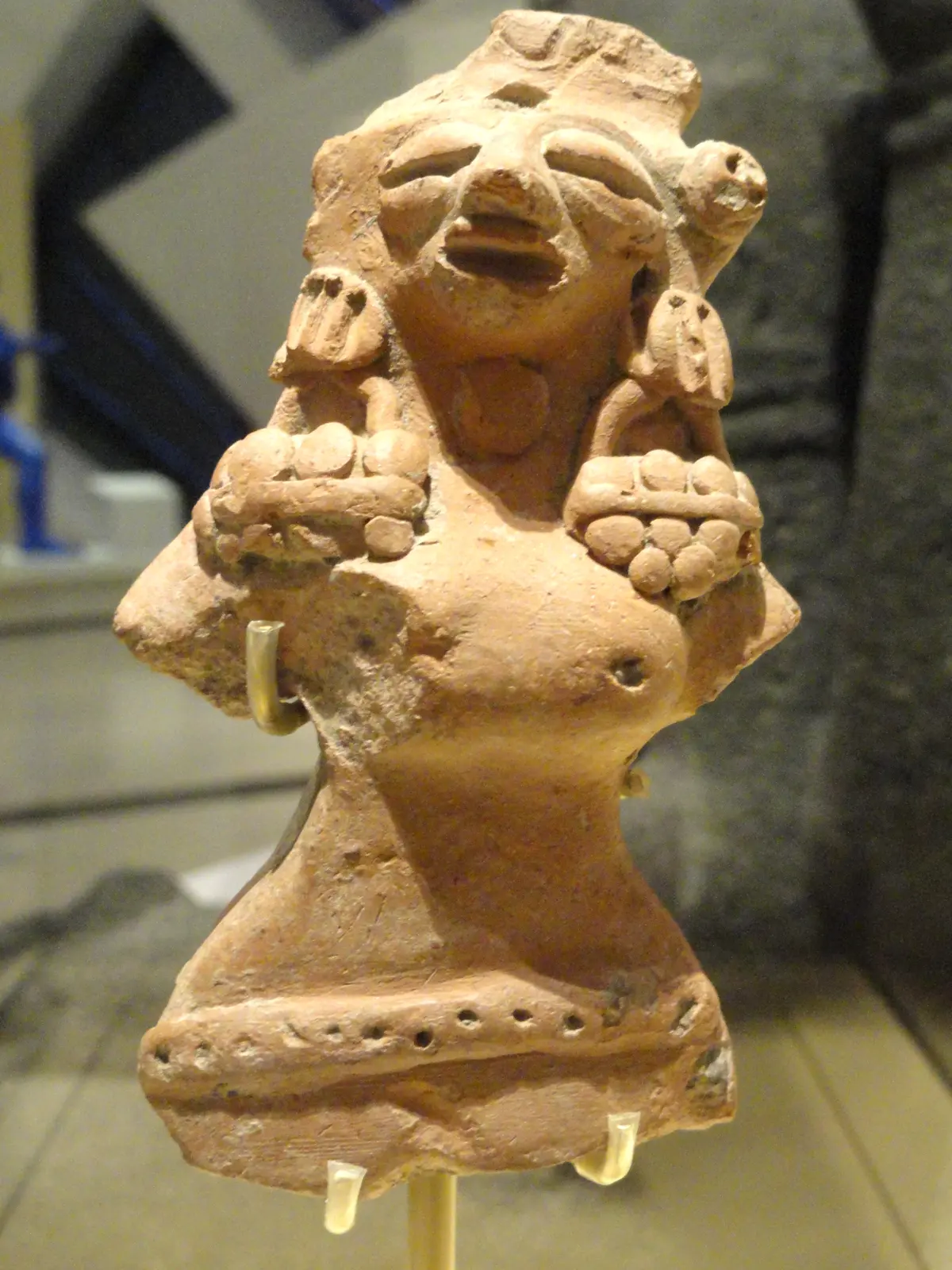
Many terracotta female figurines have been found at Harappan sites. Some have elaborate headdresses, ornaments and emphasized body features.
Older archaeologists often described such figures as Mother Goddess or fertility goddesses and connected them with fertility and agricultural abundance.
Modern archaeology is more cautious. A figurine could have been religious, but it might also have been a toy, household object, decorative figure or something whose meaning is now lost.
Therefore, it is safer to say: female figurines exist in large numbers, but their exact religious role is uncertain.
🌳 Trees on Harappan Seals
Trees and plants appear in Harappan imagery. One tree frequently identified in seal scenes is the pipal or sacred fig.
Some scenes appear to show people or figures interacting with a tree. This has led archaeologists to suggest that particular trees may have had symbolic or religious importance.
However, because the script cannot be read, we should not automatically assume that later Indian beliefs about the pipal tree existed in exactly the same form during the Harappan period.
🐂 Animals and Sacred Symbolism
Harappan seals display a remarkable variety of animals, including bulls, buffaloes, elephants, rhinoceroses and the famous so-called unicorn.
The frequent appearance of certain animals may indicate symbolic importance, social identity, economic value or religious meaning.
But an animal appearing on a seal does not automatically mean that it was worshipped as a god.
This is another case where archaeology shows us the image but not its full meaning.
🦄 The Unicorn Motif
The so-called unicorn is the most frequent animal motif on many Harappan seals. It is normally shown in profile with one long horn, often facing a stand-like object.
The motif clearly had importance in Harappan visual culture, but we do not know whether it represented a deity, clan symbol, institution, mythical creature or something else.
For exams, remember: unicorn = very common seal motif, meaning unknown.
🔥 Fire Altars?
At sites such as Kalibangan, archaeologists found structures that have sometimes been interpreted as fire altars.
Similar interpretations have also been proposed for some other Harappan sites.
However, the word 'altar' already assumes a ritual function. Without readable texts, it can be difficult to distinguish between a ritual fire structure and another kind of installation.
So the careful wording is: some structures at Kalibangan have been interpreted as fire altars.
🛁 Was the Great Bath Religious?
The Great Bath at Mohenjo-daro is another structure often connected with religion. Its large brick-lined tank, careful waterproofing and surrounding rooms suggest that it was more than an ordinary household bathroom.
Many scholars have proposed that it was used for ritual or ceremonial bathing.
This is plausible, especially because bathing later became important in several South Asian religious traditions. But there is no readable Harappan inscription saying that the Great Bath was a temple or ritual tank.
Therefore, ritual bathing remains a strong interpretation rather than a proven written fact.
🏛️ Where Are the Harappan Temples?
Unlike Mesopotamia and ancient Egypt, Harappan cities have not produced an unmistakable monumental temple that can be confidently identified from inscriptions or clear cult evidence.
This does not mean that the Harappans had no religion or places of worship.
Religious practices may have taken place in houses, open spaces, smaller structures or buildings whose functions we cannot identify today.
The absence of a clearly identified temple is itself important: we should not reconstruct Harappan religion simply by copying the religious architecture of other ancient civilizations.
⚱️ Burials and Beliefs About Death
Harappan cemeteries contain human burials, sometimes accompanied by pottery, ornaments and other objects.
At Harappa, for example, burials show that the dead could be placed in graves along with selected objects.
Such grave goods may reflect social customs or beliefs about death, memory and identity. However, they do not automatically prove a detailed belief in an afterlife.
Compared with ancient Egypt, Harappan burials generally lack enormous royal tombs and extremely rich funerary deposits.
💀 Were There Many Different Burial Practices?
Yes. Archaeological evidence suggests variation in burial customs across Harappan regions and periods.
Some bodies were buried in extended positions, while other kinds of secondary or symbolic burial practices have also been reported at different sites.
This variety reminds us that the Harappan Civilization covered a huge geographical area and did not necessarily follow one single religious ritual everywhere.
🪬 Amulets and Small Objects
Small objects sometimes described as amulets have also been found. Some carry signs, animals or other designs.
They may have been worn for protection, identity, status or ritual reasons, but their exact use is uncertain.
Again, interpretation becomes difficult because we cannot read the written signs that might explain their purpose.
👑 The 'Priest-King' Problem
A famous stone sculpture from Mohenjo-daro shows a bearded male figure wearing a decorated garment. Early archaeologists gave it the dramatic name 'Priest-King'.
But there is no inscription identifying him as either a priest or a king.
The name is therefore a modern archaeological nickname, not a Harappan title.
This object is an excellent example of why we must separate the object itself from the story scholars once built around it.
🔗 Can Harappan Religion Be Directly Linked to Later Hinduism?
Some Harappan motifs appear similar to later South Asian religious ideas: sacred trees, animal symbolism, bathing practices and the seated figure on the so-called Pashupati seal.
This has led scholars to explore possible continuities.
But a gap of many centuries and the absence of readable Harappan religious texts make direct continuity difficult to prove.
The safest approach is to say that some similarities are interesting, but direct identity with later Hindu gods or rituals cannot simply be assumed.
🔍 What Can We Say With Confidence?
We can confidently say that Harappan people used:
- seals with symbolic animal and human imagery,
- terracotta human and animal figurines,
- burial practices with selected grave goods,
- structures that may have served special communal purposes,
- repeated motifs involving animals, trees and unusual figures.
What we cannot confidently say is the exact name of their gods, prayers, religious institutions or priesthood.
🧠 Evidence vs Interpretation
Evidence: female figurine.
Interpretation: Mother Goddess.
Evidence: seated horned figure with animals.
Interpretation: Pashupati or proto-Shiva.
Evidence: brick-lined Great Bath.
Interpretation: ritual bathing.
Evidence: unusual fire-related installations.
Interpretation: fire altars.
This is the single most important method for understanding Harappan religion.
⚠️ Common Exam Traps
- The so-called Pashupati seal comes from Mohenjo-daro, but its identification with Shiva is not certain.
- Female figurines are often called Mother Goddess figures, but this interpretation is debated.
- The Great Bath may have had ritual importance, but its exact purpose is unknown.
- Some structures at Kalibangan are interpreted as fire altars.
- No unmistakable monumental Harappan temple has been securely identified.
- The famous Priest-King is not proven to have been a priest or a king.
- The Indus script remains undeciphered, so religious interpretations must remain cautious.
🎯 10-Second Revision
Pashupati seal → interpretation, not proof of Shiva.
Female figurines → possibly religious, but not automatically Mother Goddess.
Great Bath → possible ritual bathing.
Kalibangan → structures interpreted as fire altars.
Burials → beliefs/customs about death, exact meaning uncertain.
📌 The Big Idea
Harappan religion is one of the best examples of how archaeology works. We possess many objects but very few certain explanations for them.
The most responsible conclusion is not that the Harappans definitely worshipped a particular later deity. It is that their seals, figurines, burials and special structures reveal a rich symbolic world whose exact beliefs remain partly unknown.
Was this article helpful?
Help us improve by giving your feedback.
Test your understanding
Why is Harappan religion difficult to reconstruct with certainty?
- A. No archaeological objects have been found
- B. The Indus script remains undeciphered
- C. Harappan cities had no buildings
- D. All Harappan sites were destroyed in modern times
Because the Indus script remains undeciphered, historians lack readable Harappan religious texts that could explain beliefs and rituals directly.
The so-called Pashupati seal was found at which Harappan city?
- A. Lothal
- B. Dholavira
- C. Mohenjo-daro
- D. Kalibangan
The famous seal showing a seated horned figure surrounded by animals was found at Mohenjo-daro.
Which Harappan structure is often interpreted as a place for special or ritual bathing?
- A. Great Bath
- B. Lothal basin
- C. Dholavira signboard
- D. Kalibangan ploughed field
The Great Bath at Mohenjo-daro is often interpreted as having had a special collective or ritual bathing function.
Which statement about Harappan female figurines is the most historically careful?
- A. Every female figurine definitely represented one Mother Goddess
- B. They were certainly all children's toys
- C. They were portraits of known Harappan queens
- D. Some may have had religious meaning, but their exact function remains uncertain
Female figurines were once routinely labelled Mother Goddesses, but modern archaeology treats their function more cautiously because they could have served different purposes.
Which site is associated with structures interpreted by some archaeologists as fire altars?
- A. Alamgirpur
- B. Kalibangan
- C. Mohenjo-daro
- D. Rakhigarhi
Some structures at Kalibangan have been interpreted as fire altars, although the precise ritual meaning remains debated.
Why is the title 'Priest-King' considered uncertain?
- A. The sculpture was found in Egypt
- B. The figure has no beard
- C. No inscription identifies the figure as either a priest or a king
- D. The sculpture was made in modern times
The label 'Priest-King' was given by modern archaeologists; there is no readable Harappan inscription identifying the figure's actual role.
What is the best method for interpreting possible Harappan religious evidence?
- A. Separate the physical archaeological evidence from later interpretations of its meaning
- B. Assume every object has the same meaning as a later Hindu symbol
- C. Ignore archaeological context and rely only on modern myths
- D. Treat every older textbook interpretation as proven fact
Responsible interpretation begins by distinguishing what archaeologists physically found from later theories about what those objects meant.
Which statement about continuity between Harappan religion and later Hindu traditions is most accurate?
- A. Every Harappan deity has been identified with certainty
- B. There is no possible similarity at all
- C. The Harappan script proves the exact names of later Hindu gods
- D. Some similarities are suggestive, but direct continuity cannot be proved with certainty
Motifs such as animals, trees, bathing and the seated figure invite comparison with later traditions, but the undeciphered script and long chronological gap prevent certainty.